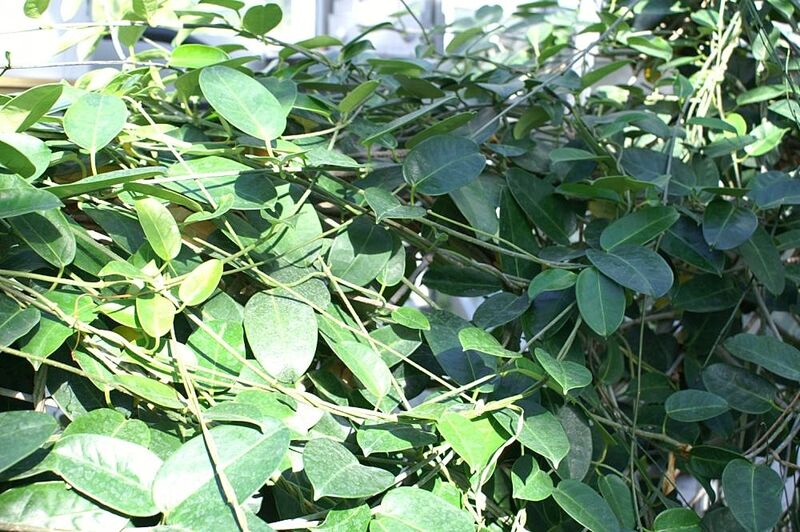
Stephanotis floribunda
Stephanotis floribunda
Stephanotis floribunda is an evergreen climbing vine that produces clusters of waxy, tubular white flowers with an intense, sweet fragrance that sits somewhere between jasmine and vanilla — which is why it has been winding its way into wedding bouquets for generations. Your plant is a determined grower that will reach 6 meters (20 feet) if given a trellis and the right conditions, though it keeps to a manageable size as a container plant. It blooms on new growth from spring through September, rewarding patience with flowers that last and linger.
How to grow Stephanotis floribunda
bright indirect light (3-6 feet
water thoroughly (water until it
60%
16-24°C
Rich, well-draining potting mix.
4-6 inch stem cuttings taken
Bud drop is the most
Fun Facts
Despite being called 'Madagascar Jasmine,' this plant is not a true jasmine and has no relation to the Jasminum genus. It is actually more closely related to milkweeds (both are in the Apocynaceae family). The jasmine name comes entirely from the fragrance.
Pet safe
Non-toxic to dogs, cats, and horses according to the ASPCA. Safe for households with pets.
Sources
- Toxic and Non-toxic Plants: Madagascar Jasmine | ASPCA (opens in new tab)ASPCA
- Madagascar Jasmine: Essential Guide to Stephanotis floribunda (opens in new tab)Botanical Garden
- Madagascar Jasmine: Essential Guide to Stephanotis floribunda (opens in new tab)Reference
- Stephanotis floribunda - Wikipedia (opens in new tab)Reference
- Stephanotis floribunda - Wikipedia (opens in new tab)Reference
- Stephanotis floribunda | North Carolina Extension Gardener Plant Toolbox (opens in new tab)Reference
- Stephanotis floribunda | RHS (opens in new tab)Reference
- Toxic and Non-toxic Plants: Madagascar Jasmine | ASPCA (opens in new tab)Reference
- Stephanotis floribunda | RHS (opens in new tab)Royal Horticultural Society
- Stephanotis floribunda | North Carolina Extension Gardener Plant Toolbox (opens in new tab)University Extension