
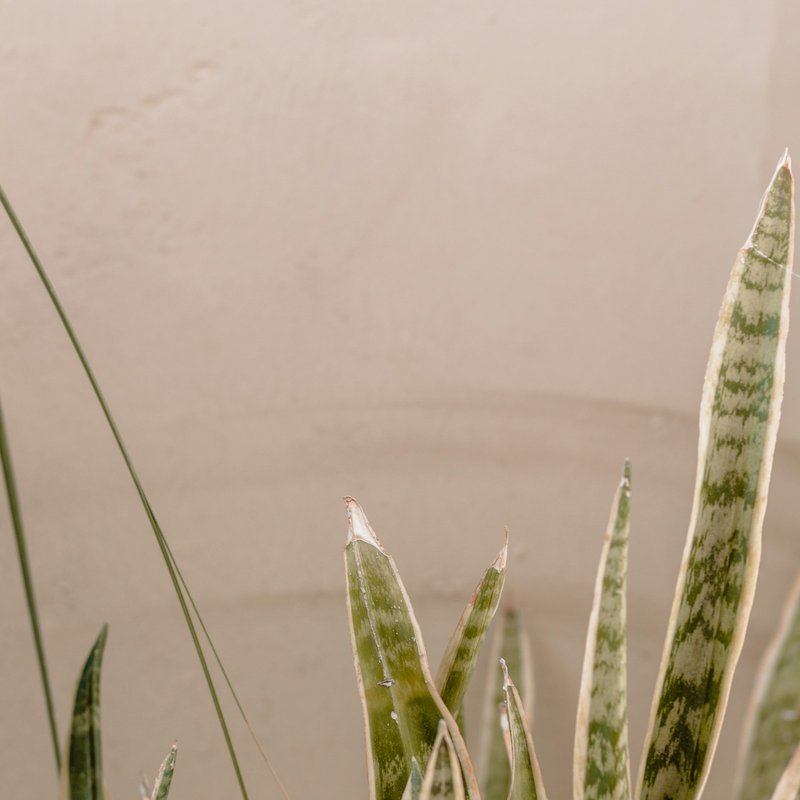
Snake Plant
Dracaena trifasciata
Good luck killing this one. It absorbs CO2 at night, tolerates basically no light, doesn't care about humidity, and will forgive you for forgetting it exists for a month. If you manage to kill a snake plant, we need to talk.
Buy this plant $22 In Stock- Light
- Low Light
- Humidity
- 30-50%
- Temperature
- 65-88°F
Light Requirements
Low Light. Tolerates low light better than most plants, but will grow faster with more. A north-facing window works. Avoid deep interior rooms with no natural light.
Watering
Every 2-4 weeks in spring and summer, once a month or less in winter. Let the soil dry out completely before watering again. Overwatering is basically the only way to kill this plant, so if you're uncertain, just wait.
Humidity
Target humidity: 30-50%. Average home humidity of 40-50% is usually sufficient. Avoid placing near heating vents, which dry the air significantly.
Temperature
Keep between 65-88°F. Avoid cold drafts from windows in winter and hot air from vents year-round. Most tropical houseplants suffer below 55°F and should never be exposed to frost.
Soil and Potting
Succulent or cactus potting mix works great. You can also mix regular potting soil with one-third coarse sand or perlite. Fast drainage is the only requirement. It doesn't need rich soil, it needs dry soil.
Propagation
Division is the way to go if you want to keep the banded variegation pattern. Separate individual shoots at the rhizome in spring, make sure each piece has roots, and repot in fresh cactus mix. Leaf cuttings in water will root, but the new plants will come up plain green. Your call.
Common Problems
Soft, mushy leaves at the base mean severe overwatering or cold damage. That's often fatal if you don't catch it early. Brown tips are usually low humidity, fluoride in your tap water, or just physical damage. Not a watering problem, despite what you might read online.
Worth Knowing
- NASA's 1989 Clean Air Study flagged snake plants as effective at removing formaldehyde, benzene, and xylene from indoor air. It's one of the more efficient air-purifying houseplants per square foot of leaf surface. The bedroom recommendation isn't just marketing.
- Snake plants use CAM photosynthesis, which means they absorb CO2 and release oxygen at night instead of during the day. That's the actual science behind putting one in your bedroom, not just a trend.
- A severely root-bound snake plant will occasionally bloom indoors, sending up a tall spike of fragrant white flowers. The pot needs to be absolutely packed with rhizomes before it'll put energy into flowering. Most owners never see it happen.
Toxicity
Toxic to cats and dogs. Contains saponins that cause nausea, vomiting, and diarrhea if ingested. Not typically fatal, but keep it away from pets who chew on things.