Gloxinia
Sinningia speciosa
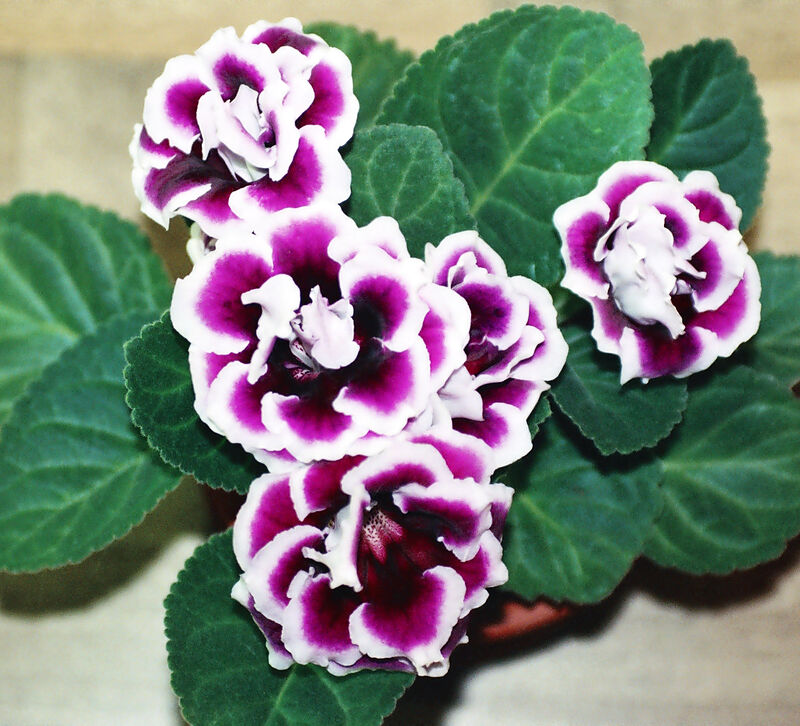
Sinningia speciosa is a tuberous perennial grown for its large, velvety, bell-shaped flowers in shades of purple, red, pink, and white — often with spotted or fringed throats that make each bloom look like it was designed for a florist's window display. Your plant forms a low rosette of big, soft leaves and puts on its show in spring and summer, then retreats underground into a tuber for a winter rest, which is not dying so much as taking a very deliberate nap. With proper dormancy care, the same tuber will bloom again year after year.
How to grow Gloxinia
bright indirect light (3-6 feet
Keep soil consistently moist during
50%
18-24°C
Well-draining, slightly acidic mix (below pH 6.
Leaf cuttings taken in spring
Crown rot and gray mold
Fun Facts
The first Sinningia speciosa tubers arrived in England around 1815 and flowered for the first time in 1816 — nurseryman Conrad Loddiges formally described and illustrated the plant in 1817, launching its rapid spread through Victorian-era European greenhouses where it became a symbol of refined taste.
Pet safe
Non-toxic to cats, dogs, and horses according to the ASPCA. Safe for households with pets.
Sources
- Gloxinia (Sinningia speciosa): All You Need To Know (opens in new tab)Botanical Garden
- Gloxinia (Sinningia speciosa): All You Need To Know (opens in new tab)Reference
- Gloxinia Care Guide: How to Grow and Maintain Sinningia speciosa (opens in new tab)Reference
- Gloxinia Care Guide: How to Grow and Maintain Sinningia speciosa (opens in new tab)Reference
- Gloxinia Plant Care Indoors - Sinningia speciosa (opens in new tab)Reference
- Gloxinia Plant Care Indoors - Sinningia speciosa (opens in new tab)Reference
- Sinningia speciosa - Wikipedia (opens in new tab)Reference
- Sinningia speciosa - Wikipedia (opens in new tab)Reference
- Sinningia speciosa | North Carolina Extension Gardener Plant Toolbox (opens in new tab)Reference
- Sinningia speciosa | North Carolina Extension Gardener Plant Toolbox (opens in new tab)University Extension