Strawberry Geranium
Saxifraga stolonifera
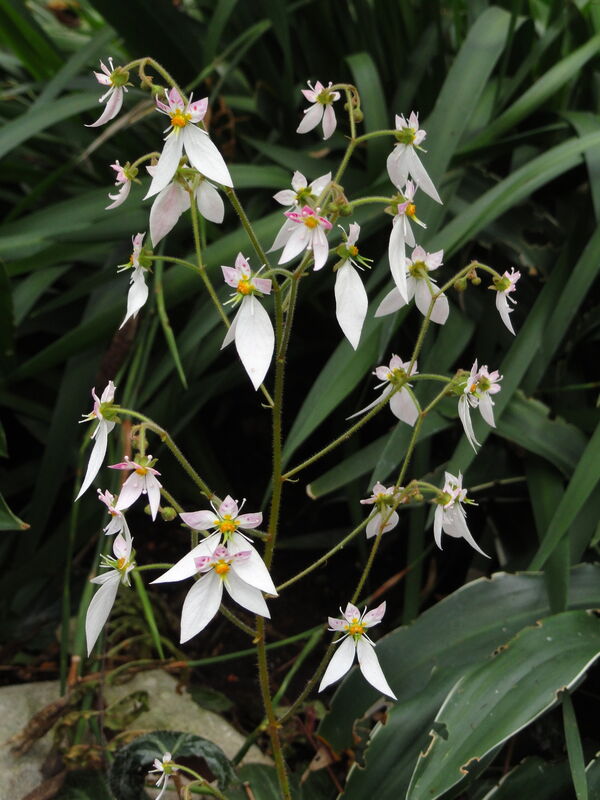
Despite two misleading common names, Saxifraga stolonifera is neither a begonia nor a geranium — it is a low-growing perennial with distinctively attractive round leaves: dark green with white veins above and deep red-purple below. In late spring, it sends up airy stalks to 18 inches bearing small white flowers with the unusual feature of two long lower petals and three small upper ones. It spreads by sending out long, threadlike red runners tipped with tiny plantlets, which is where the 'strawberry' comparison actually makes sense.
How to grow Strawberry Geranium
bright indirect light (3-6 feet
Water when the top inch
40-60%
60-75F (15-24C); appreciates a cooler
Well-draining, peat-free potting mix amended
The easiest method: pin the
Fungal rot if foliage stays
Fun Facts
The genus name Saxifraga comes from the Latin 'saxum' (rock) and 'frangere' (to break) — these plants naturally colonize rock crevices and over time can physically split the rock apart as their roots expand
Pet safe
Non-toxic to cats, dogs, and humans - a pet-safe choice
Sources
- How to Grow and Care for Strawberry Begonia Houseplants - Gardener's Path (opens in new tab)Reference
- How to Grow and Care for Strawberry Begonia Houseplants - Gardener's Path (opens in new tab)Reference
- Saxifraga stolonifera (Strawberry Begonia, Strawberry Geranium) - NC State Extension (opens in new tab)Reference
- Saxifraga stolonifera - Wikipedia (opens in new tab)Reference
- Saxifraga stolonifera - Wikipedia (opens in new tab)Reference
- The Ultimate Guide for Strawberry Begonia (Saxifraga) - UK Houseplants (opens in new tab)Reference
- The Ultimate Guide for Strawberry Begonia (Saxifraga) - UK Houseplants (opens in new tab)Reference
- Saxifraga stolonifera (Strawberry Begonia, Strawberry Geranium) - NC State Extension (opens in new tab)University Extension