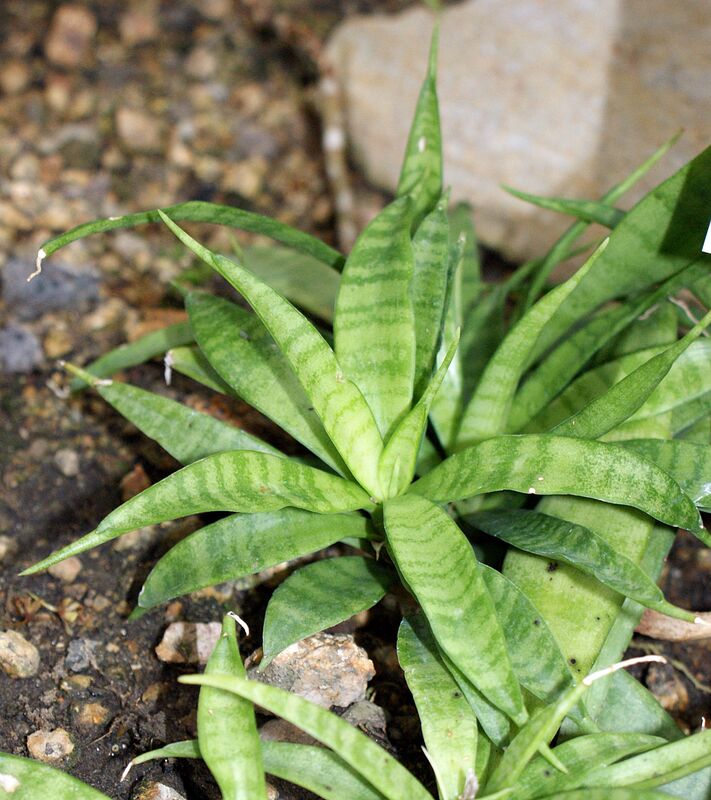
Parva Sansevieria
Sansevieria parva
Sansevieria parva is a compact, rosette-forming succulent with 6–12 narrow, arching leaves featuring dark green cross-banding on a medium green background. It stays under 18 inches tall and, unlike most sansevieria grown purely for foliage, occasionally sends up fragrant pinkish-white flower spikes that smell convincingly like hyacinth at night. Its stolons produce small plantlets at their tips, which makes it both ornamental and easy to propagate.
How to grow Parva Sansevieria
bright indirect light (3-6 feet
Let the soil dry out
Tolerates low household humidity without
65-90F (18-32C) is ideal; temperatures
30-50%
Divide offsets (pups) from the
Root rot from overwatering is
Fun Facts
Sansevieria parva was reclassified as Dracaena parva in 2018 following a major DNA-based taxonomic revision, though most nurseries still sell it under its old name
Toxic to pets
Toxic to cats and dogs; ingestion causes vomiting and diarrhea. Keep away from pets and small children
Sources
- Sansevieria parva (Kenya Hyacinth) - World of Succulents (opens in new tab)Botanical Garden
- Care of Kenya Hyacinth: Tips on Growing Flowering Sansevieria - Gardening Know How (opens in new tab)Reference
- Care of Kenya Hyacinth: Tips on Growing Flowering Sansevieria - Gardening Know How (opens in new tab)Reference
- How to Plant, Grow, and Care for Sansevieria Parva - Epic Gardening (opens in new tab)Reference
- How to Plant, Grow, and Care for Sansevieria Parva - Epic Gardening (opens in new tab)Reference
- Sansevieria Parva - Succulent City (opens in new tab)Reference
- Sansevieria Parva - Succulent City (opens in new tab)Reference
- Sansevieria parva (Kenya Hyacinth) - World of Succulents (opens in new tab)Reference