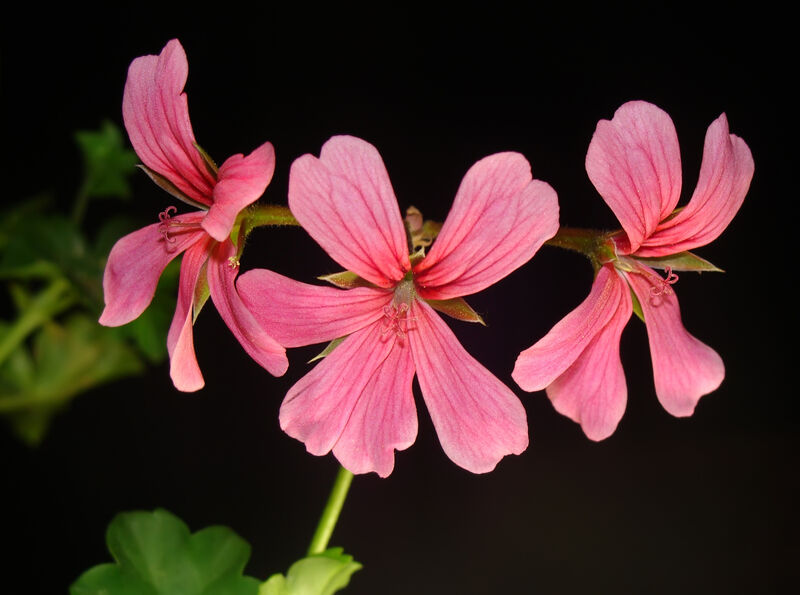
Ivy Geranium
Pelargonium peltatum
Ivy Geraniums are the ones you see tumbling out of window boxes and hanging baskets all across Europe — and once you grow one, you'll understand why. Your plant produces glossy, shield-shaped leaves on long trailing stems and blooms in clusters of single or double flowers in shades of pink, red, lavender, white, and salmon from spring through fall. It's faster-growing and more heat-tolerant than its regal cousin, and it actually prefers being a little pot-bound.
How to grow Ivy Geranium
full sun (6 or more
Water moderately during the growing
Tolerates average indoor humidity without
Prefers temperatures between 50°F and
Well-draining potting mix.
Stem cuttings are the standard
Root rot from overwatering is the main risk.
Fun Facts
The species name peltatum is Latin for 'shield-shaped,' referring to the way the leaf stalk attaches at the center of the leaf rather than the edge — the same structure that gives ivy its characteristic look and the plant its common name.
Toxic to pets
Toxic to cats, dogs, and horses according to the ASPCA. Toxic compounds include geraniol and linalool. Clinical signs include vomiting, anorexia, lethargy, and dermatitis. Keep away from pets.
Sources
- How to Grow Geraniums (Pelargoniums) - Old Farmer's Almanac (opens in new tab)Reference
- How to Grow Geraniums (Pelargoniums) - Old Farmer's Almanac (opens in new tab)Reference
- How to Grow and Care for Ivy Geraniums (opens in new tab)Reference
- How to Grow and Care for Ivy Geraniums (opens in new tab)Reference
- Pelargonium peltatum (Ivy Geranium) - Gardenia (opens in new tab)Reference
- Pelargonium peltatum (Ivy Geranium) - Gardenia (opens in new tab)Reference
- Pelargonium peltatum - Royal Horticultural Society (opens in new tab)Reference
- Pelargonium peltatum - Royal Horticultural Society (opens in new tab)Reference
- Toxic and Non-toxic Plants: Geranium - ASPCA (opens in new tab)Reference
- Toxic and Non-toxic Plants: Geranium - ASPCA (opens in new tab)Reference