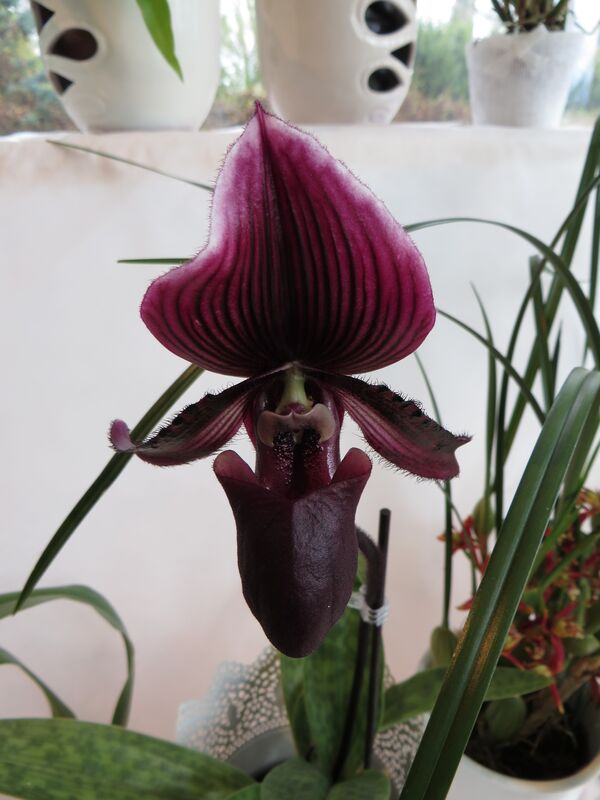
Ladyslipper Orchids
Paphiopedilum hybrids
Ladyslipper Orchids are named for the distinctive pouch-shaped lip petal that looks exactly like a small slipper — a shape that doubles as a clever pollinator trap in the wild. Unlike most orchids, your Paphiopedilum has no pseudobulbs for water storage, which means it needs slightly more consistent moisture than its cousins. The upside is that these are among the most beginner-friendly orchids available, tolerating lower light levels that would leave other orchids sulking.
How to grow Ladyslipper Orchids
Low to moderate indirect light.
Water every 5 to 7
70%
Comfortable between 55°F and 85°F (13 to 29°C).
Loose, well-draining bark-based orchid mix.
Division at repotting time is
Root rot from overwatering or
Fun Facts
Every wild Paphiopedilum species is listed on CITES Appendix I — the highest level of trade protection — because demand from collectors has pushed 53% of the genus's 85 assessed species to Critically Endangered status.
Pet safe
Non-toxic to cats, dogs, and humans.
Sources
- Care of Paphiopedilum - Smithsonian Gardens (opens in new tab)Botanical Garden
- Care of Paphiopedilum - Smithsonian Gardens (opens in new tab)Botanical Garden
- 12 Fun Facts About the Paphiopedilum (opens in new tab)Reference
- 12 Fun Facts About the Paphiopedilum (opens in new tab)Reference
- Paphiopedilum - Wikipedia (opens in new tab)Reference
- Paphiopedilum - Wikipedia (opens in new tab)Reference
- Paphiopedilum Culture Sheet - American Orchid Society (opens in new tab)Reference
- Paphiopedilum Culture Sheet - American Orchid Society (opens in new tab)Reference
- Paphiopedilum - NC State Extension Gardener Plant Toolbox (opens in new tab)University Extension
- Paphiopedilum - NC State Extension Gardener Plant Toolbox (opens in new tab)University Extension