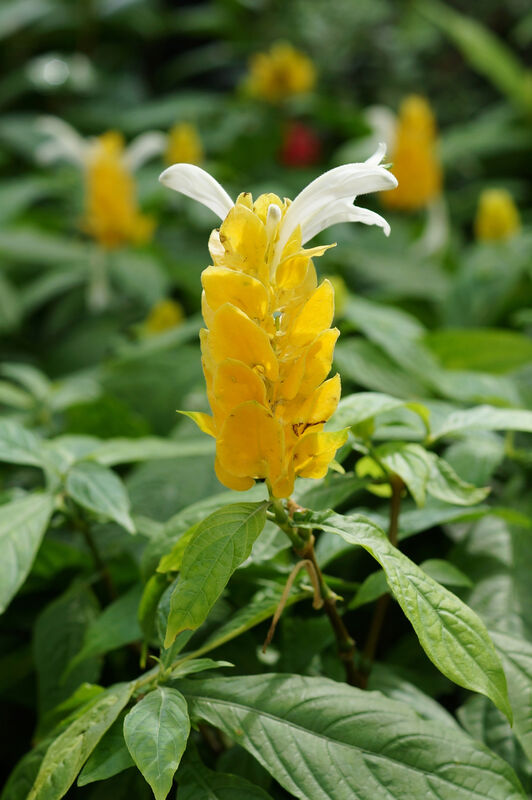
Yellow Shrimp Plant
Pachystachys lutea
The Yellow Shrimp Plant earns every one of its nicknames: the stacked golden-yellow bracts really do look like overlapping shrimp scales or a lit candle, and the white tubular flowers poking out the top complete the effect. You'll enjoy this one as a long-blooming shrubby houseplant that hits 2 to 3 feet indoors and rewards regular pinching with a fuller, more dramatic shape. Give it enough light and warmth and it will flower for months.
How to grow Yellow Shrimp Plant
Needs bright indirect light (3-6
Keep soil evenly moist during
70%
Thrives between 65°F and 80°F (18 to 27°C).
Fertile, moist, well-draining soil (equal
Stem tip cuttings root readily.
Leggy growth is common without regular pinching.
Fun Facts
The genus name Pachystachys comes from the Greek words pachys ('thick') and stachys ('spike or ear of corn'), describing the dense, columnar flower spikes that make this plant so recognizable.
Toxic to pets
Reported as toxic to animals and humans by some sources. Keep away from children, cats, dogs, and other pets.
Sources
- Pachystachys lutea - Missouri Botanical Garden Plant Finder (opens in new tab)Botanical Garden
- Pachystachys lutea - Missouri Botanical Garden Plant Finder (opens in new tab)Botanical Garden
- Golden Shrimp Plant: How To Care For Pachystachys Lutea (opens in new tab)Reference
- Golden Shrimp Plant: How To Care For Pachystachys Lutea (opens in new tab)Reference
- Golden Shrimp Plant: How to Grow Flowering Pachystachys lutea Indoors (opens in new tab)Reference
- Golden Shrimp Plant: How to Grow Flowering Pachystachys lutea Indoors (opens in new tab)Reference
- Pachystachys lutea - Wikipedia (opens in new tab)Reference
- Pachystachys lutea - Wikipedia (opens in new tab)Reference
- Pachystachys lutea Golden Shrimp Plant - University of Florida IFAS Extension (opens in new tab)University Extension
- Pachystachys lutea Golden Shrimp Plant - University of Florida IFAS Extension (opens in new tab)University Extension