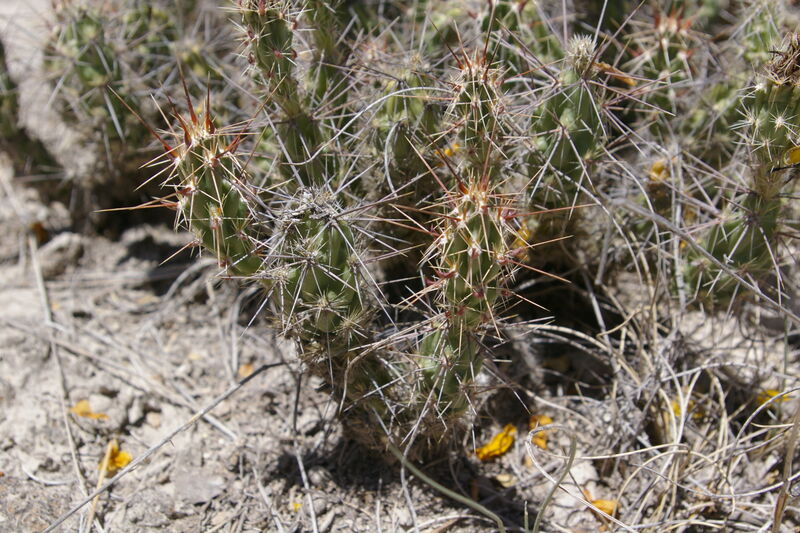
Little Tree Cactus
Opuntia vilis
Despite its 'little' name, the Little Tree Cactus can reach 8 feet tall in the right conditions, forming a branching, tree-like structure of flat paddle-shaped cladodes (stem segments) armed with spines. It produces purple flowers and, like all Opuntia, the entire plant -- pads, flowers, and fruit -- is edible. What sets it apart from the crowd is that combination of potential height, showy purple blooms, and the characteristic Opuntia toughness that laughs at neglect.
How to grow Little Tree Cactus
full sun (6 or more
Water deeply in spring and
Low humidity is fine and actually preferred.
Hot temperatures during the growing
50%
Remove a pad with tongs,
Root rot from overwatering is the primary killer.
Fun Facts
Opuntia uses CAM (Crassulacean Acid Metabolism) photosynthesis, opening its stomata at night to take in carbon dioxide rather than during the hot day -- a clever adaptation that massively reduces water loss in arid environments.
Pet safe
Non-toxic to dogs, cats, and humans -- the pads (nopales) and fruit are edible and nutritious. However, the physical spines and glochids cause significant mechanical injury and are difficult to remove from skin; keep out of reach of pets and children for safety.
Sources
- Tree Cactus - ASPCA Toxic and Non-Toxic Plants (opens in new tab)ASPCA
- Tree Cactus - ASPCA Toxic and Non-Toxic Plants (opens in new tab)ASPCA
- Prickly Pear Cacti: Food, Medicine, Legend, a Symbol of Mexico - Naples Botanical Garden (opens in new tab)Botanical Garden
- How to Grow and Care for Opuntia - World of Succulents (opens in new tab)Reference
- How to Grow and Care for Opuntia - World of Succulents (opens in new tab)Reference
- Opuntia vilis - The Cactus King (opens in new tab)Reference
- Opuntia vilis - The Cactus King (opens in new tab)Reference
- Prickly Pear Cacti: Food, Medicine, Legend, a Symbol of Mexico - Naples Botanical Garden (opens in new tab)Reference