Black Alloplectus
Nautilocalyx lynchii
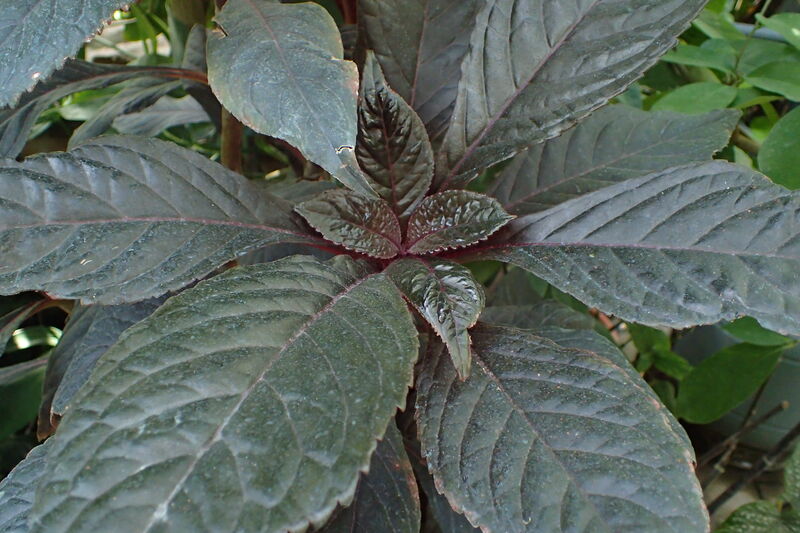
Nautilocalyx lynchii is an upright, fibrous-rooted tropical perennial with stout, succulent stems and some of the darkest foliage in the houseplant world -- the elliptic leaves have a bronze to blackish-red sheen that looks almost metallic in good light. It produces small, creamy yellow flowers with purplish hairs in axillary clusters along the stem in summer, though the foliage is honestly the main event. It is a rewarding gesneriad for those who can meet its humidity demands, and it is genuinely easier to grow than many of its more glamorous Gesneriaceae relatives.
How to grow Black Alloplectus
bright indirect light (3-6 feet
Regular watering every 2-4 days
70%
Thrives in 65-85 degrees F (18-30 degrees C).
Light, breathable, slightly acidic mix.
Stem cuttings placed in a
Spider mites are the most common pest.
Fun Facts
Nautilocalyx lynchii was originally described by Joseph Hooker and published in the Botanical Magazine in 1892 under the name Alloplectus lynchii -- it has been through three genus names before settling in Nautilocalyx, reflecting how much Gesneriaceae taxonomy has shifted over the decades.
Toxic to pets
No widespread reports of toxicity to humans or pets. Not listed as a toxic plant by major poison control sources.
Sources
- Nautilocalyx lynchii | Plants of the World Online | Kew Science (opens in new tab)Botanical Garden
- Nautilocalyx Care Guide: Cultivation, Maintenance, and Tips | WhatFlower (opens in new tab)Reference
- Nautilocalyx Care Guide: Cultivation, Maintenance, and Tips | WhatFlower (opens in new tab)Reference
- Nautilocalyx lynchii | Black Alloplectus | Plant Lust (opens in new tab)Reference
- Nautilocalyx lynchii | Black Alloplectus | Plant Lust (opens in new tab)Reference
- Nautilocalyx lynchii | Plants of the World Online | Kew Science (opens in new tab)Reference
- Nautilocalyx lynchii | Steve's Leaves (opens in new tab)Reference
- Nautilocalyx lynchii | Steve's Leaves (opens in new tab)Reference