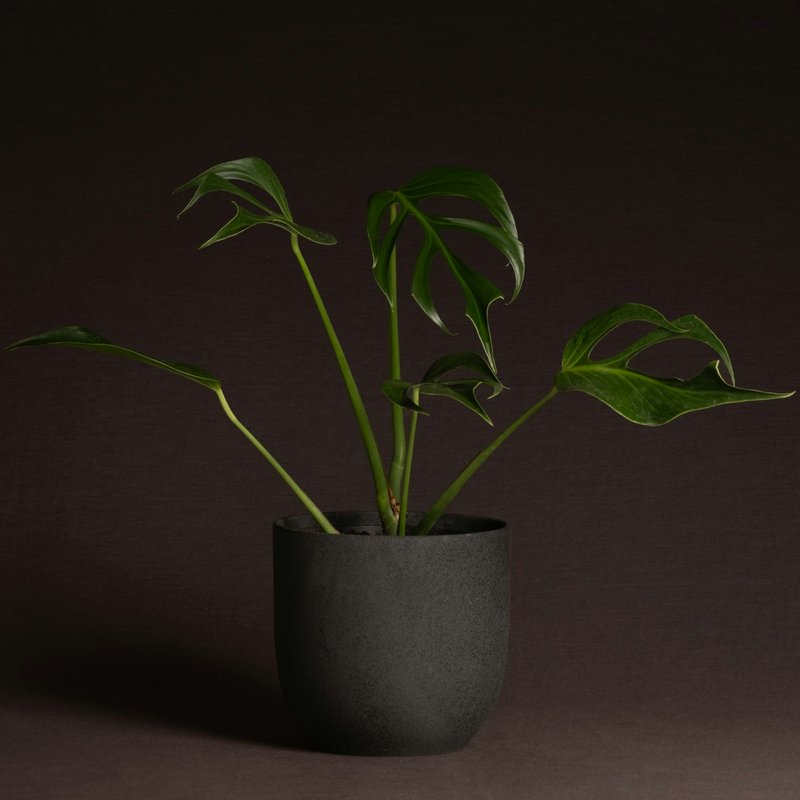
Monstera
Monstera sp.
Monstera is a genus of roughly 59 species of climbing tropical aroids, most famous for developing large leaves with natural holes and slits called fenestrations as they mature -- a trait that has made them one of the most recognizable houseplant silhouettes in the world. They are hemiepiphytes by nature, meaning they start life on the ground and then climb trees using aerial roots, eventually growing to enormous sizes in their native forests. As houseplants they are adaptable, visually impressive, and far more forgiving than their exotic appearance suggests.
Fun Facts
Botanists can't actually agree on what this plant is. It's listed as Monstera sp. because nobody has confirmed whether it's its own species or a variation of an existing one. You're growing a taxonomic mystery!
The genus name Monstera comes from the Latin word for 'monstrous' or 'abnormal' -- a reference to the plant's dramatically perforated, oversized leaves rather than anything sinister.
Named after Roberto Burle Marx (1909-1994), a Brazilian landscape architect who built one of the largest private tropical plant collections on earth. His farm outside Rio is now a UNESCO World Heritage Site.
The 'flame' look comes from fenestrations that cut way deeper toward the midrib than most Monsteras. The narrow leaf sections left behind look like ribs or flames. That extreme fenestration is what collectors are after.