
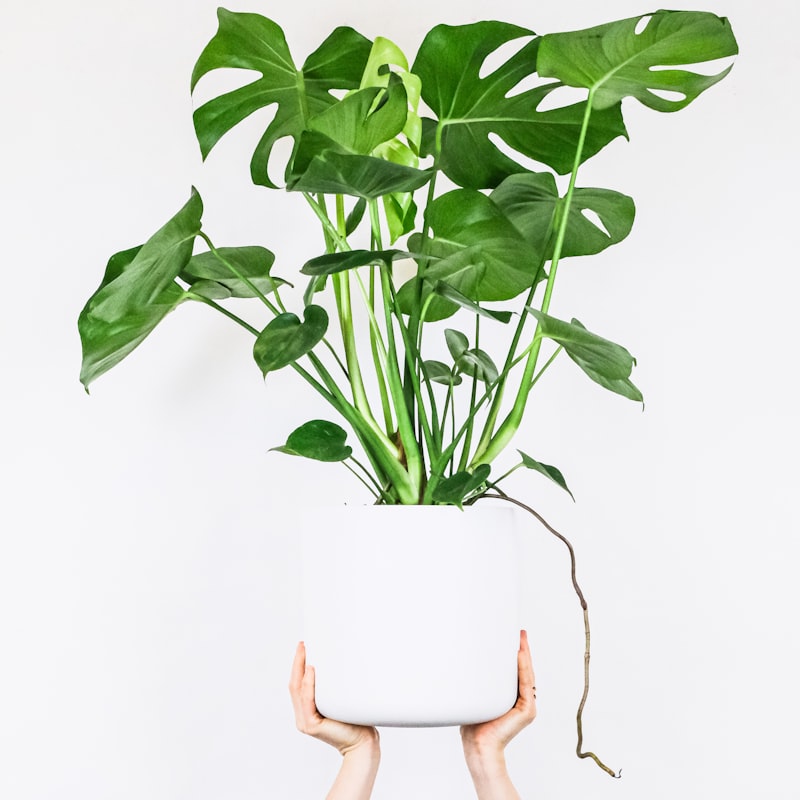
Monstera Deliciosa
Monstera deliciosa
It actually produces edible fruit when it matures. The fenestrations (those iconic splits and holes) develop with age and better light, so each new leaf ends up more dramatic than the last.
Buy this plant $28 In Stock- Light
- Bright Indirect
- Humidity
- 40-60%
- Temperature
- 65-85°F
Light Requirements
Bright Indirect. Place within 3-5 feet of a south or east-facing window, out of direct sun. Direct afternoon sun will scorch leaves.
Watering
Stick your finger 2-3 inches into the soil. Dry? Water it. In summer that's about every 7-10 days. Drench it until water runs out the bottom, then leave it completely alone. The number one Monstera killer isn't neglect. It's people who love their plant too much and water it on a Tuesday because it's Tuesday.
Humidity
Target humidity: 40-60%. Average home humidity of 40-50% is usually sufficient. Avoid placing near heating vents, which dry the air significantly.
Temperature
Keep between 65-85°F. Avoid cold drafts from windows in winter and hot air from vents year-round. Most tropical houseplants suffer below 55°F and should never be exposed to frost.
Soil and Potting
Equal parts quality potting soil, orchid bark, and perlite. You want something that drains fast but still holds a bit of moisture. Avoid dense, peat-heavy mixes. They stay wet too long and that's where root rot starts.
Propagation
Cut a stem section just below a node, making sure you've got at least one node and one leaf on the cutting. Root it in water or moist sphagnum moss somewhere warm and bright. Roots show up in 4-8 weeks. Wait until they're 2-3 inches long before moving to soil.
Common Problems
Yellow leaves almost always mean overwatering. Check the soil before you do anything else. Brown tips point to low humidity or fluoride in your tap water. No fenestrations? Either the plant needs more light or it's under 2-3 years old. Both are fixable.
Worth Knowing
- The fruit is real and actually edible, tasting like a cross between pineapple, banana, and passionfruit once it's fully ripe. Don't eat it unripe though. The calcium oxalate crystals in unripe fruit will burn your mouth in a way you won't forget.
- Wild Monstera seedlings practice skototropism: they actively grow toward darkness to find a tree trunk, then reverse direction and climb toward light. No other major houseplant does this. It's a plant that navigates. Let that sink in.
- Why do the leaves have holes? Scientists still aren't sure. Leading theories include letting light pass through to lower leaves, reducing wind resistance, and mimicking insect damage to look less appetizing to herbivores. The debate continues.
Toxicity
Toxic to cats, dogs, and humans. It contains insoluble calcium oxalate crystals that cause oral irritation and throat swelling if ingested. Keep it out of reach of pets and small children.