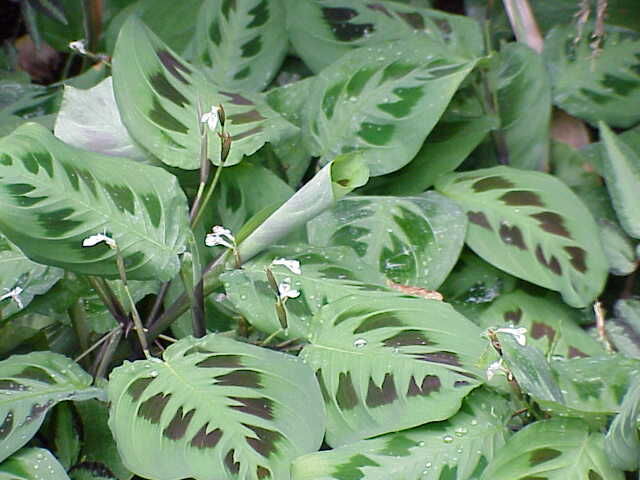
Red Nerve Plant
Maranta leuconeura
Maranta leuconeura var. erythroneura -- the red nerve plant -- has some of the most dramatic leaf patterning in the houseplant world: deep green leaves with a pale green center stripe and vivid reddish-pink lateral veins that look painted on. Like all prayer plants, it folds its leaves upright at night and unfurls them each morning, a reliable daily event that never really gets old. You get visual interest, rhythmic motion, and confirmed pet safety all in one compact package.
How to grow Red Nerve Plant
bright indirect light (3-6 feet
Water when the top inch
50-60%
Prefers stable warmth around 65-80
Well-draining mix with good organic content.
Division of the rhizomes in
Brown leaf tips and edges
Fun Facts
The leaf-folding behavior is called nyctinasty, and it happens because a specialized hydraulic joint (the pulvinus) at the base of each leaf expands and contracts in response to changes in light -- it is essentially a plant muscle driven by water pressure.
Pet safe
Non-toxic to cats, dogs, and humans. Listed as safe by the ASPCA. One of the most reliably pet-safe decorative houseplants available.
Sources
- Maranta leuconeura | NC State Extension Gardener Plant Toolbox (opens in new tab)Botanical Garden
- Maranta leuconeura - Wikipedia (opens in new tab)Reference
- Maranta leuconeura - Wikipedia (opens in new tab)Reference
- Maranta leuconeura | NC State Extension Gardener Plant Toolbox (opens in new tab)Reference
- Prayer Plant Care Guide: Tips for Thriving Maranta leuconeura | Almanac (opens in new tab)Reference
- Prayer Plant Care Guide: Tips for Thriving Maranta leuconeura | Almanac (opens in new tab)Reference
- Toxic and Non-toxic Plants: Maranta | ASPCA (opens in new tab)Reference
- Toxic and Non-toxic Plants: Maranta | ASPCA (opens in new tab)Reference