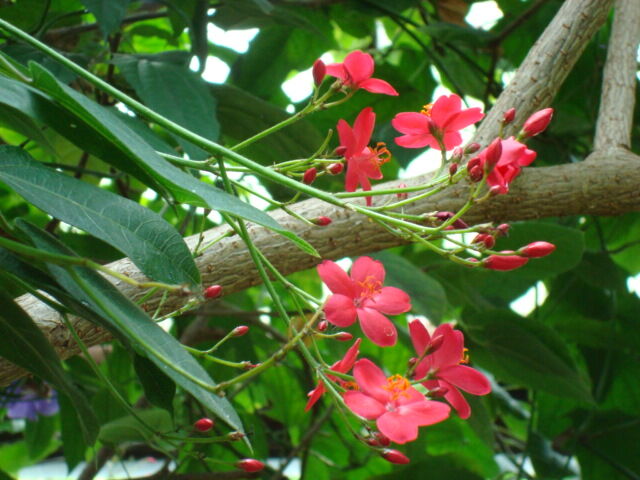
Peregrian
Jatropha integerrima
Peregrina is a tropical shrub or small tree that produces vivid crimson flower clusters nearly year-round in warm climates, attracting a constant stream of butterflies, hummingbirds, and monarch butterflies to the garden. You need full sun and frost-free conditions to get its best from it, and you should treat every part of the plant -- including the milky sap -- as toxic, because it genuinely is, especially the seeds.
How to grow Peregrian
full sun (6 or more
drought tolerant (can go 2-3
Tolerates a range of humidity
65-85°F
Well-draining loamy or sandy soil
Stem cuttings root readily in summer.
Whiteflies, mealybugs, and spider mites
Fun Facts
The name 'Peregrina' means 'wanderer' in Spanish and Latin, a fitting name for a plant originally from the Caribbean that has naturalized across tropical regions worldwide. The genus name Jatropha comes from the Greek words for 'physician' and 'nutrition' -- a nod to its long history in traditional medicine despite its real toxicity.
Toxic to pets
Toxic to humans and animals. All parts contain phorbol esters and lectins; seeds are particularly dangerous and ingesting as few as three can be fatal to humans. The milky latex sap irritates skin and mucous membranes. Not suitable for homes with small children or pets. Call Poison Control (800-222-1222) if ingested.
Sources
- Jatropha -- Port St. Lucie Botanical Gardens (opens in new tab)Botanical Garden
- Jatropha -- Port St. Lucie Botanical Gardens (opens in new tab)Botanical Garden
- Jatropha integerrima -- Top Tropicals Plant Encyclopedia (opens in new tab)Botanical Garden
- Growing Jatropha Integerrima: Caring For The Jatropha Tree -- Plant Care Today (opens in new tab)Reference
- Growing Jatropha Integerrima: Caring For The Jatropha Tree -- Plant Care Today (opens in new tab)Reference
- Jatropha integerrima -- Top Tropicals Plant Encyclopedia (opens in new tab)Reference
- Jatropha integerrima -- Wikipedia (opens in new tab)Reference
- Jatropha integerrima -- Wikipedia (opens in new tab)Reference