Wax Plant
Hoya carnosa
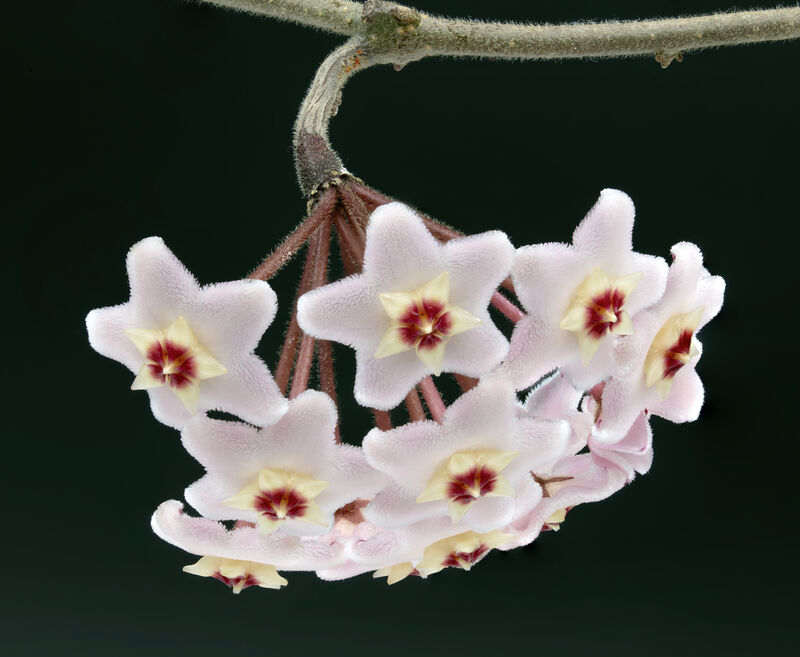
The Wax Plant earns its name from the thick, waxy leaves and the utterly alien-looking star-shaped flowers that cluster into perfect little globes and drip nectar -- yes, they actually drip. You can grow it in a hanging basket or train it up a trellis, and if you leave the spent flower spurs alone, those same spurs will keep producing blooms year after year for as long as you own the plant.
How to grow Wax Plant
bright indirect light (3-6 feet
Allow the top 2 inches
50-70%
60-85°F
Loose, fast-draining potting mix high
Stem cuttings with 2-3 nodes
Mealybugs, aphids, fungus gnats, and
Fun Facts
Hoya carnosa flowers are nocturnal perfumers -- the sweet scent intensifies dramatically at night, an adaptation to attract nighttime pollinators. The flowers also physically drip nectar, which is quite a surprise the first time you notice a puddle under your plant.
Pet safe
Non-toxic to dogs, cats, and humans according to ASPCA and NCSU Extension. The milky sap may cause mild skin irritation in sensitive people when the plant is cut.
Sources
- Hoya carnosa (Wax Plant): All You Need To Know -- Gardenia (opens in new tab)Botanical Garden
- Hoya Carnosa Care Made Easy -- Garden Betty (opens in new tab)Reference
- Hoya Carnosa Care Made Easy -- Garden Betty (opens in new tab)Reference
- Hoya carnosa (Wax Plant): All You Need To Know -- Gardenia (opens in new tab)Reference
- Hoya carnosa -- Wikipedia (opens in new tab)Reference
- Hoya carnosa -- Wikipedia (opens in new tab)Reference
- Hoya carnosa -- NC State Extension Gardener Plant Toolbox (opens in new tab)University Extension
- Hoya carnosa -- NC State Extension Gardener Plant Toolbox (opens in new tab)University Extension