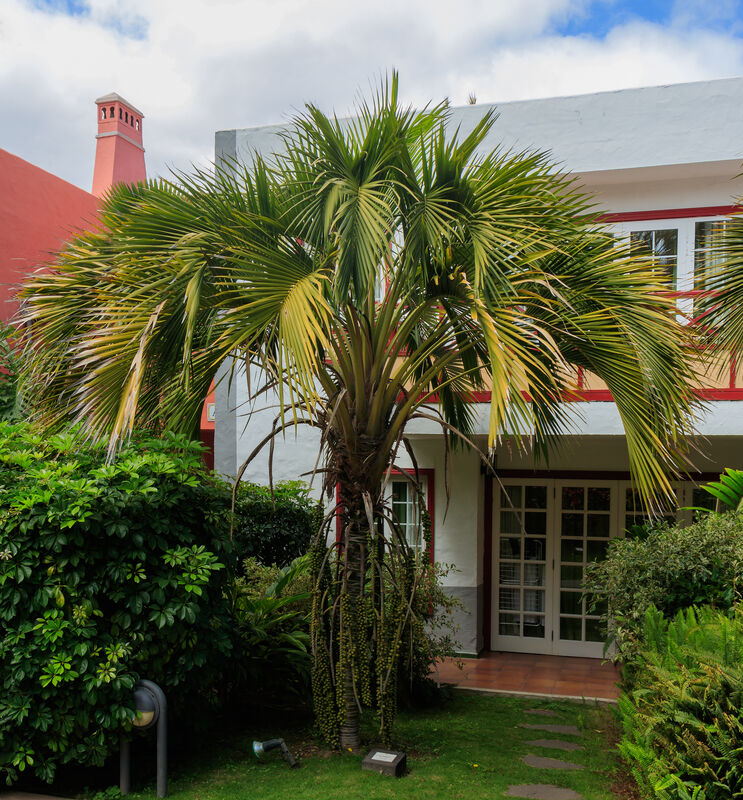
Belmore Sentry Palm
Howea belmoreana
Howea belmoreana is a stately, slow-growing single-trunked palm with gracefully arching fronds whose leaflets curve upward, giving it its 'Curly Palm' nickname and making it immediately distinguishable from its close relative H. forsteriana. Indoors it grows to around 10 feet over many years, gracing Victorian conservatories and modern living rooms alike with the same dignified presence. Your patience with its slow pace is repaid in decades of elegant, virtually indestructible tropical atmosphere.
How to grow Belmore Sentry Palm
bright indirect light (3-6 feet
water thoroughly (water until it
50-55%
60-80°F
Fast-draining potting mix rich in
Seed only.
Root rot from overwatering or waterlogged soil.
Fun Facts
Howea belmoreana and its sister species H. forsteriana are the only two palms in the genus, both endemic to Lord Howe Island. Their divergence into two distinct species on the same small island without geographic isolation is a documented example of sympatric speciation, driven largely by differences in flowering time and soil preference.
Pet safe
Non-toxic to cats, dogs, and horses. Confirmed safe by NC State Extension and consistent with ASPCA classification of Howea palms.
Sources
- Howea belmoreana - NC State Extension Gardener Plant Toolbox (opens in new tab)Reference
- Howea belmoreana - RHS Plant Detail (opens in new tab)Reference
- Howea belmoreana - Wikipedia (opens in new tab)Reference
- Howea belmoreana - Wikipedia (opens in new tab)Reference
- Sentry Palm (Howea belmoreana) Grow and Care Indoors - Home Plants Guide (opens in new tab)Reference
- Sentry Palm (Howea belmoreana) Grow and Care Indoors - Home Plants Guide (opens in new tab)Reference
- Howea belmoreana - RHS Plant Detail (opens in new tab)Royal Horticultural Society
- Howea belmoreana - NC State Extension Gardener Plant Toolbox (opens in new tab)University Extension