Jewel Leaf Plant
Graptopetalum amethystinum
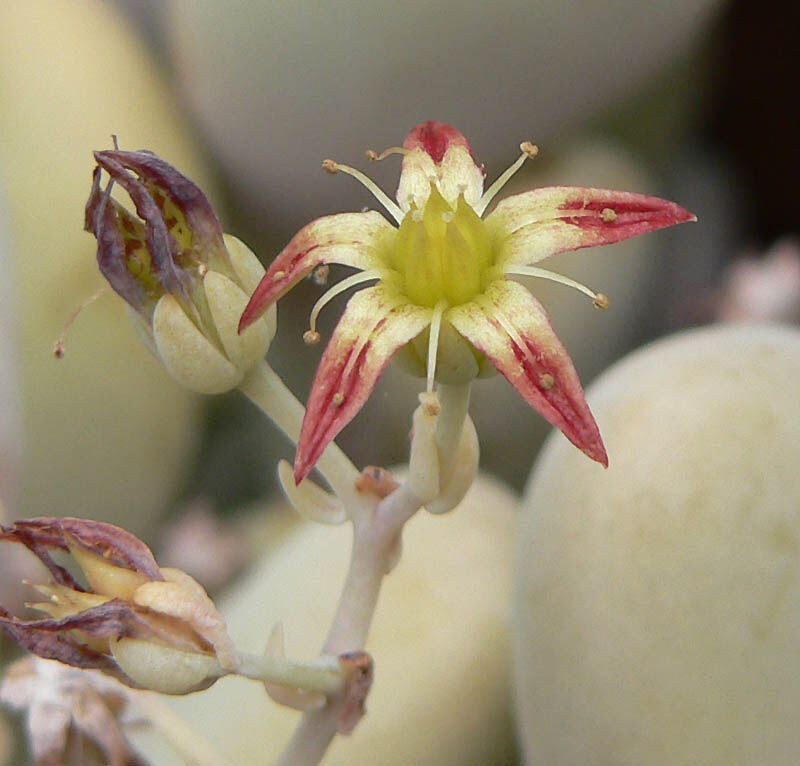
Graptopetalum amethystinum forms slow-growing rosettes of thick, rounded, lavender-to-pinkish leaves that look like someone glued smooth river pebbles together, earning it the 'lavender pebbles' nickname. The coloring intensifies or fades with light levels, so you're essentially growing a living mood ring. In spring it sends up short inflorescences with star-shaped yellow-white flowers marked with distinctive red bands on the petal tips.
How to grow Jewel Leaf Plant
Bright light is needed for
Classic soak-and-dry succulent watering: water
Low humidity preferred, consistent with
65-80°F
Fast-draining sandy or gritty succulent mix.
Very easy from leaf cuttings
Overwatering and root rot are the main risks.
Fun Facts
The name amethystinum refers directly to the plant's amethyst-purple leaf coloring, and the genus name Graptopetalum means 'marked petals' in Greek, referencing the distinctive red crossbands that decorate the flower petals.
Pet safe
Non-toxic to humans, cats, and dogs. Generally considered safe, though the sap may cause mild skin irritation in sensitive individuals. Ingestion may cause minor stomach upset.
Sources
- Graptopetalum amethystinum | RHS Plants (opens in new tab)Botanical Garden
- Graptopetalum Amethystinum Care (Lavender Pebbles Succulent) (opens in new tab)Reference
- Graptopetalum Amethystinum Care (Lavender Pebbles Succulent) (opens in new tab)Reference
- Graptopetalum amethystinum (Jewel-leaf Plant) - World of Succulents (opens in new tab)Reference
- Graptopetalum amethystinum (Jewel-leaf Plant) - World of Succulents (opens in new tab)Reference
- Graptopetalum amethystinum | RHS Plants (opens in new tab)Reference
- Growing Jewel Leaf Plant: How To Care For Graptopetalum Amethystinum (opens in new tab)Reference
- Growing Jewel Leaf Plant: How To Care For Graptopetalum Amethystinum (opens in new tab)Reference