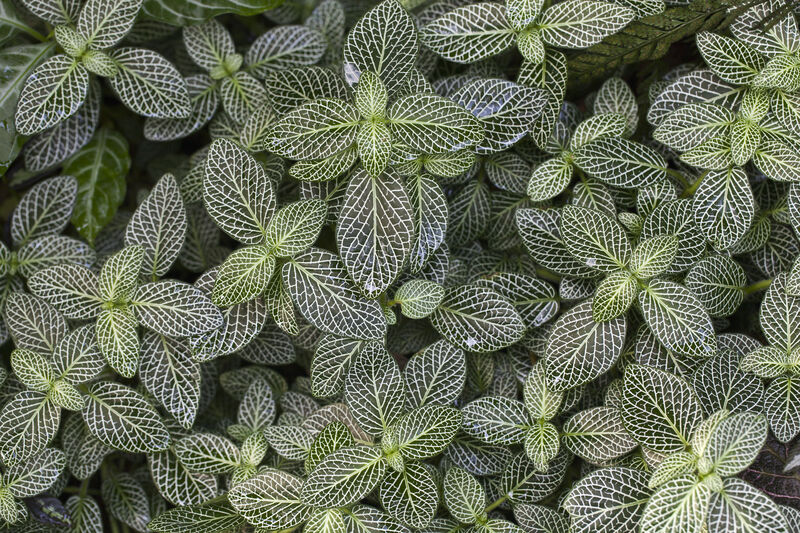
Red-Nerved Fittonia
Fittonia verschaffeltii
Fittonia verschaffeltii is a low-growing creeping perennial with dark green oval leaves threaded through with vivid red veins, creating the mosaic pattern that earns it the 'nerve plant' nickname. It's a compact little drama queen — if it dries out even slightly, it wilts theatrically, only to spring back the moment you water it again. Terrariums and wardian cases suit it perfectly, since you can dial in the high humidity it craves without daily attention.
How to grow Red-Nerved Fittonia
bright indirect light (3-6 feet
Keep soil consistently moist but not waterlogged.
60-80%
65-85°F
Peat-based or coco coir potting
Stem tip cuttings root easily
Spider mites and mealybugs are
Fun Facts
The red-veined Fittonia verschaffeltii belongs to the Verschaffeltii Group, while its white-veined cousins belong to the Argyroneura Group — the plant was effectively split into two groups based on vein color, which feels very on-brand for a plant this obsessed with its own veins.
Pet safe
Non-toxic to humans, cats, and dogs. Safe to have around pets and children, though ingestion of any plant material in quantity can cause mild digestive upset.
Sources
- Fittonia Care: Beginner's Guide To Growing Nerve Plants (opens in new tab)Reference
- Fittonia Care: Beginner's Guide To Growing Nerve Plants (opens in new tab)Reference
- How to Care for a Red Nerve Plant (opens in new tab)Reference
- How to Care for a Red Nerve Plant (opens in new tab)Reference
- Nerve Plant Care - How To Grow Fittonia Plants (opens in new tab)Reference
- Nerve Plant Care - How To Grow Fittonia Plants (opens in new tab)Reference
- Nerve Plant Care Guide: How to Grow Fittonia verschaffeltii (opens in new tab)Reference
- Nerve Plant Care Guide: How to Grow Fittonia verschaffeltii (opens in new tab)Reference
- Nerve Plant Care: How to Grow Fittonia Verschaffeltii Indoors (opens in new tab)Reference
- Nerve Plant Care: How to Grow Fittonia Verschaffeltii Indoors (opens in new tab)Reference