Rooting Fig
Ficus sagittata
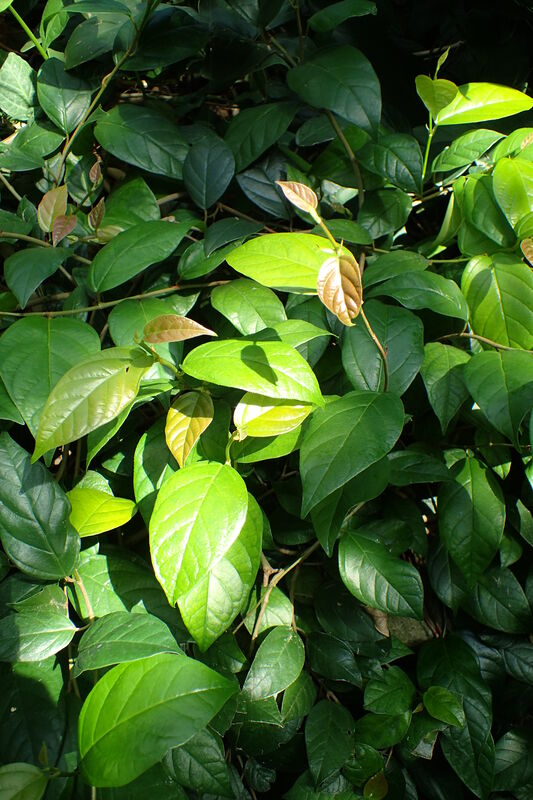
Ficus sagittata is a vigorous trailing and climbing fig with wiry stems that can reach 10-15 meters in the wild, bearing lance-shaped, glossy dark green leaves up to 30 cm long that flush orange-red when newly emerged. Indoors it makes a graceful hanging basket plant with cascading stems that earn it the 'trailing' name. You'll want to keep humidity high and resist the urge to overwater, as soggy roots are the fastest way to end your relationship with this one.
How to grow Rooting Fig
bright indirect light (3-6 feet
water thoroughly (water until it
60-70%
60-80°F
Well-draining, slightly acidic mix (pH 6.
Stem cuttings 4-6 inches long
Watch for spider mites (especially
Fun Facts
Ficus sagittata often begins life as an epiphyte — sprouting in the branch of a tree — before sending aerial roots to the ground that can eventually encircle and outcompete the host tree entirely.
Toxic to pets
Toxic to humans, cats, and dogs. The milky latex causes oral irritation, drooling, vomiting, and gastrointestinal upset if ingested. Wear gloves when pruning.
Sources
- Ficus sagittata - Useful Tropical Plants (opens in new tab)Botanical Garden
- Ficus sagittata Vahl | Plants of the World Online | Kew Science (opens in new tab)Botanical Garden
- Ficus sagittata - Useful Tropical Plants (opens in new tab)Reference
- Ficus sagittata - Wikipedia (opens in new tab)Reference
- Ficus sagittata - Wikipedia (opens in new tab)Reference
- Ficus sagittata Vahl | Plants of the World Online | Kew Science (opens in new tab)Reference
- Trailing Fig (Ficus Sagittata) Plant Care & How to Grow (opens in new tab)Reference
- Trailing Fig (Ficus Sagittata) Plant Care & How to Grow (opens in new tab)Reference
- Variegated Rooting Fig (Ficus radicans 'Variegata') Care Indoors (opens in new tab)Reference
- Variegated Rooting Fig (Ficus radicans 'Variegata') Care Indoors (opens in new tab)Reference