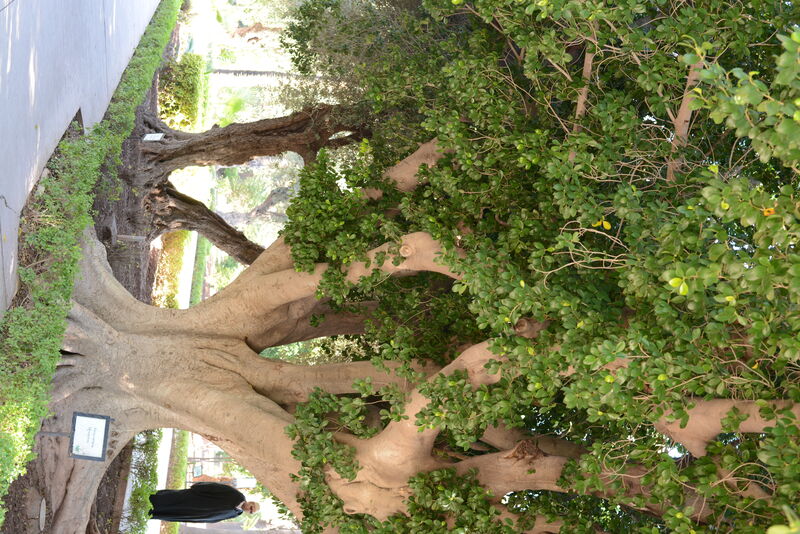
Cuban Laurel
Ficus retusa
Cuban Laurel is a large tropical tree that has found a second career as one of the most popular bonsai subjects in the world, thanks to its dense canopy, small glossy leaves, tolerance for indoor conditions, and spectacular gnarled roots. The 'Ginseng' form — with dramatically swollen, bulbous prop roots — is sold everywhere as a ready-made bonsai starter. In the wild it grows to 80 feet with a broad spreading crown and aerial roots that can develop into secondary trunks.
How to grow Cuban Laurel
bright indirect light (3-6 feet
Keep soil evenly moist but
60-80%
60-75°F
Well-draining potting mix or bonsai-specific
Stem cuttings in spring.
Scale insects and thrips are
Fun Facts
Ficus microcarpa (Ficus retusa) is considered an invasive species in Hawaii, Florida, Bermuda, and several Pacific Island groups — its tiny seeds are spread by birds and bats, and the plant can germinate in concrete cracks and eventually strangle host trees.
Toxic to pets
Toxic to cats and dogs if leaves are ingested. Keep out of reach of pets. The sap is also a skin and eye irritant.
Sources
- Ficus Bonsai Care Guide - Bonsai Empire (opens in new tab)Reference
- Ficus Bonsai Care Guide — Bonsai Empire (opens in new tab)Reference
- Ficus microcarpa - Wikipedia (opens in new tab)Reference
- Ficus microcarpa 'Ginseng' — NC State Extension Gardener Plant Toolbox (opens in new tab)Reference
- Ficus microcarpa — Wikipedia (opens in new tab)Reference
- Ficus retusa Fact Sheet — University of Florida IFAS (opens in new tab)Reference
- Ficus microcarpa 'Ginseng' - NC State Extension Gardener Plant Toolbox (opens in new tab)University Extension
- Ficus retusa Fact Sheet - University of Florida IFAS (opens in new tab)University Extension