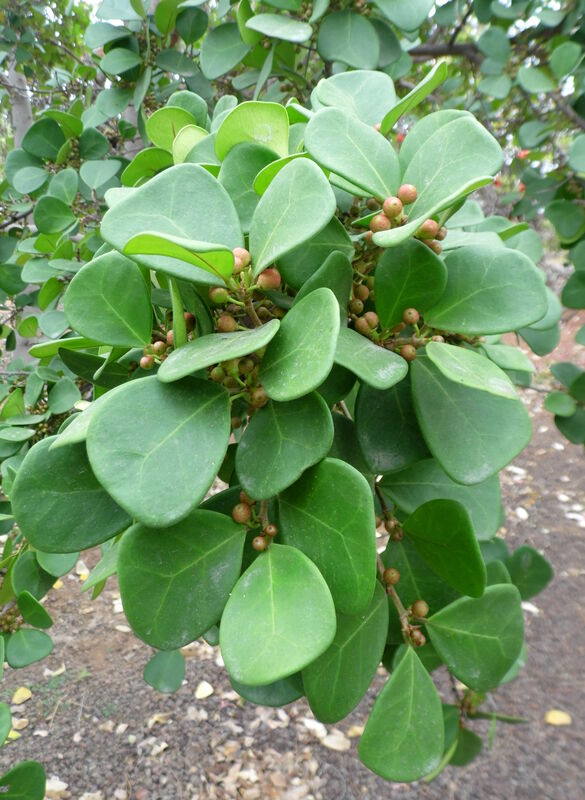
Mistletoe Ficus
Ficus deltoidea
Mistletoe Ficus earns its name from the small round berries it produces year-round, ripening from white to red just like mistletoe. The leaves are rounded and glossy on top, with a distinctive golden-yellow underside dotted with black spots — flip a leaf over and it's like a completely different plant. It is one of the more relaxed members of the Ficus family: slow-growing, tolerant of indoor conditions, and not prone to the dramatic leaf-dropping tantrums of its relatives.
How to grow Mistletoe Ficus
Bright light with 4-6 hours
Water liberally during the growing
60-80%
65-75°F
Well-draining mix with perlite or vermiculite.
Stem cuttings.
Mealybugs, aphids, scale, and thrips.
Fun Facts
Mistletoe Ficus produces small decorative figs year-round — a rare trait among houseplants — which start white, turn yellow, then mature to red or orange, giving the plant a perpetual holiday look.
Toxic to pets
Toxic to cats, dogs, and horses. Like other Ficus, produces milky white latex sap that is irritating to eyes and skin, and can cause mouth irritation, drooling, vomiting, diarrhea, and appetite loss if ingested.
Sources
- Ficus deltoidea — NC State Extension Gardener Plant Toolbox (opens in new tab)Reference
- How to Care for Your Mistletoe Fig - The Houseplant Guru (opens in new tab)Reference
- How to Care for Your Mistletoe Fig — The Houseplant Guru (opens in new tab)Reference
- Mistletoe Fig Care Indoors and Propagation - Home Plants Guide (opens in new tab)Reference
- Mistletoe Fig Care Indoors and Propagation — Home Plants Guide (opens in new tab)Reference
- Ficus deltoidea - NC State Extension Gardener Plant Toolbox (opens in new tab)University Extension