Milkbush
Euphorbia tirucalli
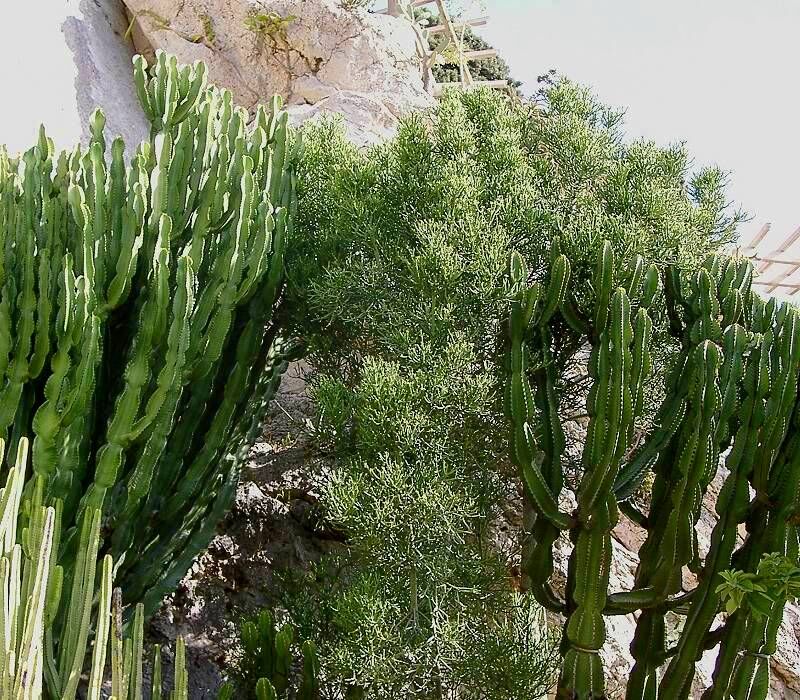
Milkbush is a succulent shrub or small tree that looks exactly like someone glued a bunch of pencils together — slim, cylindrical, bright green stems with no leaves to speak of, branching outward from a woody trunk. In the wild it can reach 30 feet; indoors it stays a more manageable 2–6 feet. Certain cultivars earn the 'Fire Sticks' name when stem tips flush vivid orange, red, and pink in strong sunlight.
How to grow Milkbush
Bright indirect to direct sun
Let the soil dry out completely before watering.
Low humidity is fine.
60-85°F
Coarse, fast-draining cactus mix with
Stem cuttings.
Root rot from overwatering, spider
Fun Facts
Despite the name 'Pencil Cactus,' this plant is not a cactus at all — it is a Euphorbia, more closely related to poinsettia than to any cactus family member.
Toxic to pets
Highly toxic to humans, cats, dogs, and horses. The abundant milky white latex sap is one of the most irritating plant substances known. Skin contact causes burning and severe irritation. Eye contact can cause temporary or permanent corneal damage. Ingestion causes nausea, vomiting, stomach cramps, and diarrhea. Wear disposable gloves, eye protection, and long sleeves any time you prune or repot. Sap remains irritating on dried clothing for hours.
Sources
- Euphorbia tirucalli Toxicity - StatPearls / NCBI (opens in new tab)Reference
- Euphorbia tirucalli Toxicity — StatPearls / NCBI (opens in new tab)Reference
- Euphorbia tirucalli — NC State Extension Gardener Plant Toolbox (opens in new tab)Reference
- Pencil Cactus (Milkbush) — University of Arkansas Extension (opens in new tab)Reference
- Euphorbia tirucalli - NC State Extension Gardener Plant Toolbox (opens in new tab)University Extension
- Pencil Cactus (Milkbush) - University of Arkansas Extension (opens in new tab)University Extension