Scarlet Violet
Episcia reptans
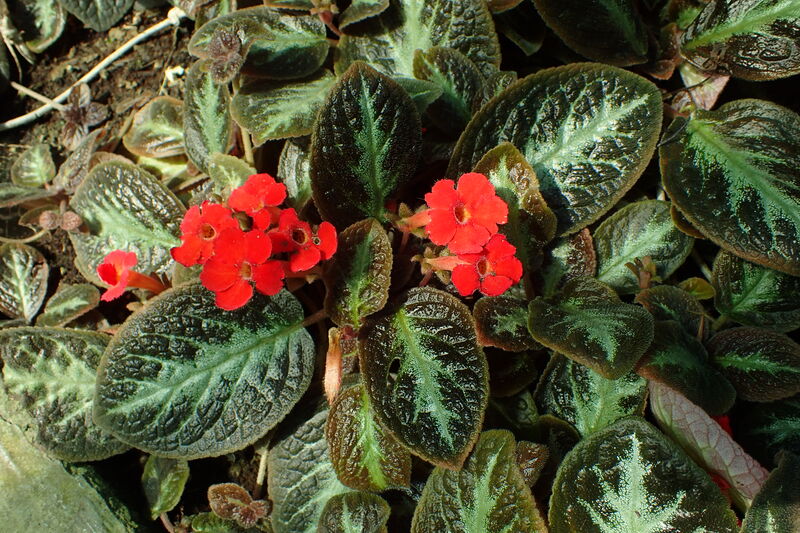
Episcia reptans is a low, creeping perennial that hugs the ground with elliptical, velvety leaves that are typically dark green with silvery or coppery patterning and produces vivid scarlet, trumpet-shaped flowers with a ring of fine hairs inside the throat. Your plant stays compact at 4-6 inches tall but spreads generously sideways via trailing stolons, making it ideal for hanging baskets, terrariums, or as a tabletop specimen where the runners can tumble freely over the edge. It is sometimes confused with Episcia cupreata, and indeed the care requirements are nearly identical.
How to grow Scarlet Violet
Bright, indirect light or artificial
Keep soil consistently moist but never soggy.
60-80%
65-80°F
Rich, airy potting mix with good drainage.
Very easy from stolons.
Spider mites and mealybugs.
Fun Facts
The genus name Episcia derives from the Greek word episkios, meaning 'shaded,' which tells you exactly where to put it: away from direct sun and in the kind of dappled light found on a tropical forest floor.
Pet safe
Non-toxic to cats, dogs, and horses, confirmed by the ASPCA.
Sources
- Episcia - Wikipedia (opens in new tab)Reference
- Episcia - Wikipedia (opens in new tab)Reference
- How to Grow and Care for Episcia - Houseplant 411 (opens in new tab)Reference
- How to Grow and Care for Episcia - Houseplant 411 (opens in new tab)Reference
- How to Grow and Care for Flame Violets - Gardener's Path (opens in new tab)Reference
- How to Grow and Care for Flame Violets - Gardener's Path (opens in new tab)Reference
- Episcia reptans - NC State Extension Gardener Plant Toolbox (opens in new tab)University Extension
- Episcia reptans - NC State Extension Gardener Plant Toolbox (opens in new tab)University Extension