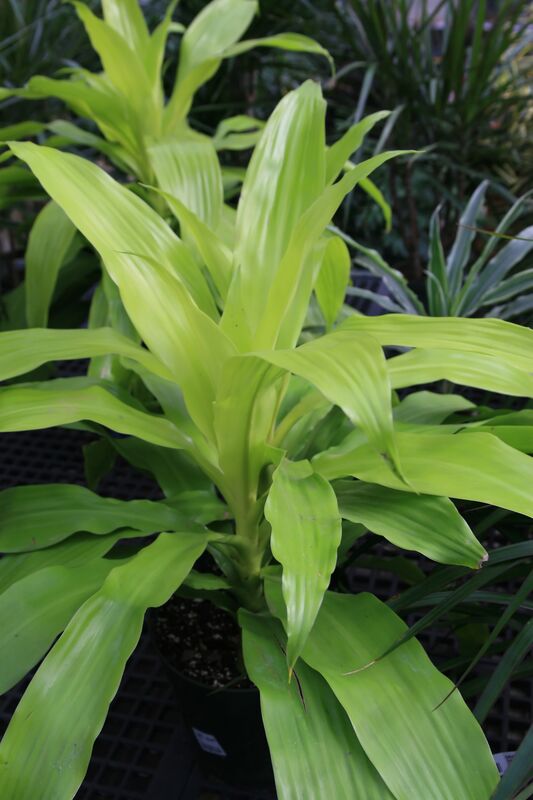
Janet Craig
Dracaena deremensis
Janet Craig is the dracaena that earns its keep in the darkest corners of offices and homes — it's one of the most shade-tolerant large-leafed houseplants you can buy, with glossy, deep green strap leaves that look polished and tropical without any fuss. It grows slowly into a tidy column 4 to 6 feet tall, barely asking for attention along the way. The catch is that it contains saponins, so keep it away from cats and dogs who might decide to nibble.
How to grow Janet Craig
Adapts to low light (more
Water when the top third
Tolerates average indoor humidity.
60-85°F
Well-draining, general-purpose indoor potting mix.
Stem tip cuttings or cane
Root rot from overwatering is the primary killer.
Fun Facts
Janet Craig was included in NASA's Clean Air Study for its ability to remove formaldehyde, benzene, and trichloroethylene from indoor air — making it one of the most studied houseplants for air quality.
Toxic to pets
Toxic to dogs, cats, and horses per ASPCA. Contains saponins. Ingestion causes vomiting (occasionally with blood), depression, loss of appetite, excessive drooling, and dilated pupils in cats. Contact ASPCA Poison Control at (888) 426-4435 if a pet ingests any part of this plant.
Sources
- 'Janet Craig' Dracaena - House Plant Care for Dracaena deremensis (opens in new tab)Reference
- 'Janet Craig' Dracaena - House Plant Care for Dracaena deremensis (opens in new tab)Reference
- Dracaena deremensis Indoor Care and Common Problems | Home Plants Guide (opens in new tab)Reference
- Dracaena deremensis Indoor Care and Common Problems | Home Plants Guide (opens in new tab)Reference
- Dracaena | ASPCA Toxic and Non-Toxic Plants (opens in new tab)Reference
- Dracaena | ASPCA Toxic and Non-Toxic Plants (opens in new tab)Reference
- How to Care for Dracaena Janet Craig Plant | Easyplant (opens in new tab)Reference
- How to Care for Dracaena Janet Craig Plant | Easyplant (opens in new tab)Reference
- Striped Dracaena | ASPCA Toxic and Non-Toxic Plants (opens in new tab)Reference
- Striped Dracaena | ASPCA Toxic and Non-Toxic Plants (opens in new tab)Reference