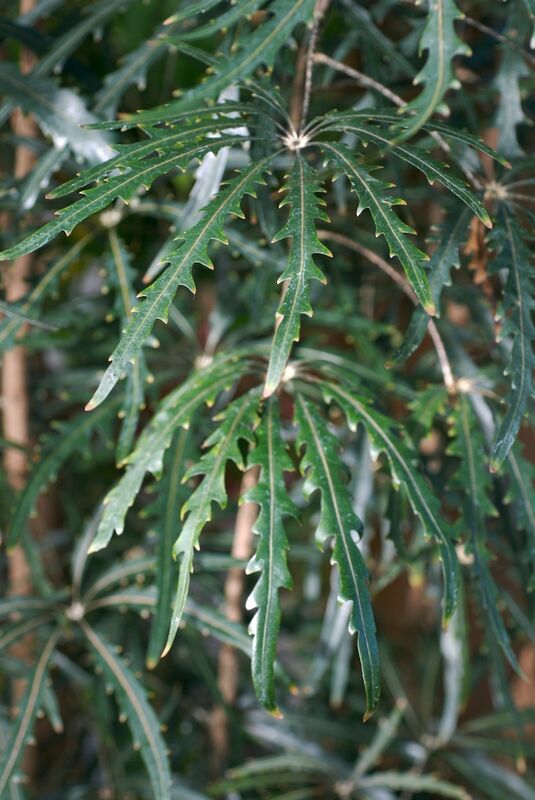
False Aralia
Dizygotheca elegantissima
False Aralia is a study in elegance — its juvenile leaves are made up of 7 to 10 narrow, deeply serrated leaflets arranged like outstretched fingers, starting coppery-bronze and deepening to near-black green as they mature. It grows slowly into a striking indoor tree up to 6 feet tall, developing a single woody trunk over time. It rewards steady conditions and punishes moves and drafts with dramatic leaf drop, so find it a good spot and leave it alone.
How to grow False Aralia
Medium to bright indirect light
water thoroughly (water until it
50%
65-85°F
Well-draining potting mix.
Stem tip cuttings in spring.
Leaf drop is the most
Fun Facts
This plant has gone through three genus names in 150 years — Aralia (1872), Schefflera (1878), Dizygotheca (early 1900s), and finally its current accepted name Plerandra (2013) — a record of botanical indecision that nurseries have largely ignored.
Pet safe
Non-toxic to dogs, cats, and horses per ASPCA. Safe for pet-friendly homes.
Sources
- False Aralia (Plerandra elegantissima) | Costa Farms (opens in new tab)Reference
- False Aralia (Plerandra elegantissima) | Costa Farms (opens in new tab)Reference
- False Aralia Plant Care: Grow Dizygotheca elegantissima Indoors (opens in new tab)Reference
- False Aralia Plant Care: Grow Dizygotheca elegantissima Indoors (opens in new tab)Reference
- False Aralia | ASPCA Toxic and Non-Toxic Plants (opens in new tab)Reference
- False Aralia | ASPCA Toxic and Non-Toxic Plants (opens in new tab)Reference
- Plerandra elegantissima | Wikipedia (opens in new tab)Reference
- Plerandra elegantissima | Wikipedia (opens in new tab)Reference
- Dizygotheca elegantissima False Aralia | UF/IFAS Extension (opens in new tab)University Extension
- Dizygotheca elegantissima False Aralia | UF/IFAS Extension (opens in new tab)University Extension