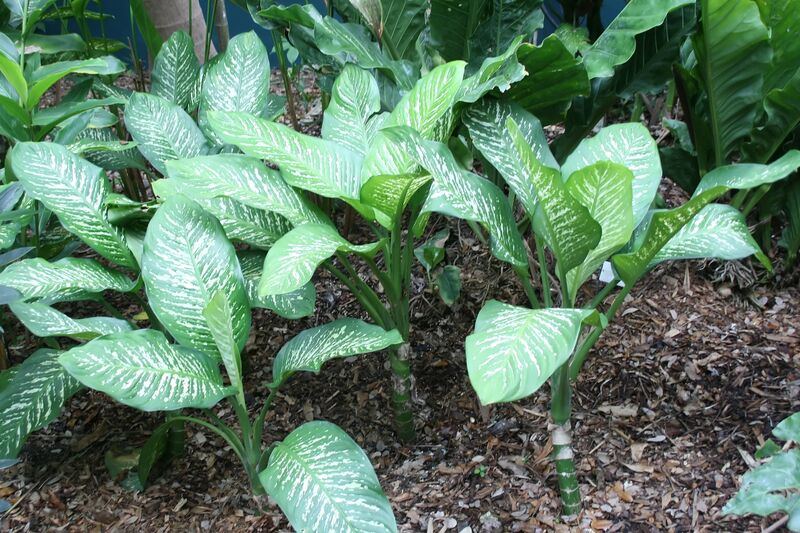
Spotted Dumb Cane
Dieffenbachia maculata
Spotted Dumb Cane is a bold, easy-to-grow houseplant with large oblong leaves patterned in shades of green, cream, and yellow — each cultivar gives you something slightly different, which is half the fun. It grows steadily to around 3–4 feet indoors and handles a range of light conditions that would stress out more demanding plants. Handle it with gloves, keep it away from pets and kids, and it will reward you with lush tropical foliage for years.
How to grow Spotted Dumb Cane
Tolerates a wide range, from
water thoroughly (water until it
60-80%
65-75°F
Loose, fertile, well-draining medium with
Stem tip cuttings, cane sections,
Root rot from overwatering is the main threat.
Fun Facts
Taxonomically, D. maculata is now a synonym for D. seguine — botanists folded multiple Dieffenbachia species together after decades of naming confusion, though the old name still shows up on plant labels everywhere.
Toxic to pets
Toxic to dogs, cats, and humans. Contains calcium oxalate raphides that cause intense oral burning, swelling, drooling, and difficulty swallowing if ingested. Severe swelling of the throat may impair speech. Wear gloves when handling to avoid contact dermatitis. Contact ASPCA Poison Control at (888) 426-4435 if ingested by a pet.
Sources
- Spotted Dumb Cane | ASPCA Toxic and Non-Toxic Plants (opens in new tab)Reference
- Spotted Dumb Cane | ASPCA Toxic and Non-Toxic Plants (opens in new tab)Reference
- Dieffenbachia Diseases: Identification and Control | UF/IFAS EDIS (opens in new tab)University Extension
- Dieffenbachia Diseases: Identification and Control | UF/IFAS EDIS (opens in new tab)University Extension
- Dieffenbachia maculata 'Rudolf Roehrs' | UF/IFAS Extension (opens in new tab)University Extension
- Dieffenbachia maculata 'Rudolf Roehrs' | UF/IFAS Extension (opens in new tab)University Extension
- Dieffenbachia seguine | NC State Extension Gardener Plant Toolbox (opens in new tab)University Extension
- Dieffenbachia seguine | NC State Extension Gardener Plant Toolbox (opens in new tab)University Extension
- Dieffenbachia | Clemson Cooperative Extension HGIC (opens in new tab)University Extension
- Dieffenbachia | Clemson Cooperative Extension HGIC (opens in new tab)University Extension