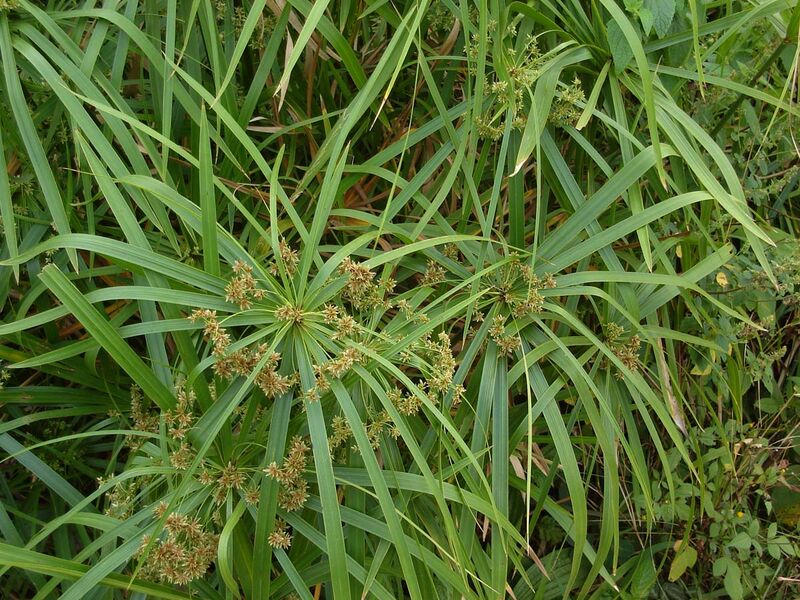
Cyperus alternifolius
Cyperus alternifolius
Cyperus alternifolius is an aquatic sedge that breaks the cardinal rule of houseplant care by actively wanting its roots to be wet at all times, which makes it both unusual and remarkably hard to overwater. It grows tall, slender stems up to 150 cm (or more outdoors) topped with radiating whorls of narrow green bracts that look exactly like the ribs of an open umbrella, giving it an architectural, almost Dr. Seuss-like silhouette that is genuinely eye-catching in a bright room or water garden.
How to grow Cyperus alternifolius
full sun (6 or more
This is a semi-aquatic plant
Moderate to high.
65-80°F
Rich, moisture-retentive mix with good
Division of clumps (most reliable),
Browning leaf tips almost always
Fun Facts
Cyperus alternifolius is closely related to the Egyptian papyrus plant (Cyperus papyrus) — the plant used to make the papyrus paper that gave us our word 'paper'. The Umbrella Plant is sometimes called 'false papyrus' because of its similar appearance at smaller scale.
Toxic to pets
Not listed as toxic by ASPCA. Generally considered safe for cats, dogs, and humans, though it is not specifically catalogued in all databases. Exercise normal plant-handling precautions.
Sources
- Cyperus Umbrella Houseplants: Growing Information and Care - Gardening Know How (opens in new tab)Reference
- Cyperus Umbrella Houseplants: Growing Information and Care — Gardening Know How (opens in new tab)Reference
- Cyperus alternifolius — NC State Extension Gardener Plant Toolbox (opens in new tab)Reference
- Umbrella Grass (Cyperus alternifolius) - Our House Plants (opens in new tab)Reference
- Umbrella Grass (Cyperus alternifolius) — Our House Plants (opens in new tab)Reference
- Umbrella Plant - ASPCA Plant Listing (opens in new tab)Reference
- Umbrella Plant — ASPCA Plant Listing (opens in new tab)Reference
- Cyperus alternifolius - NC State Extension Gardener Plant Toolbox (opens in new tab)University Extension