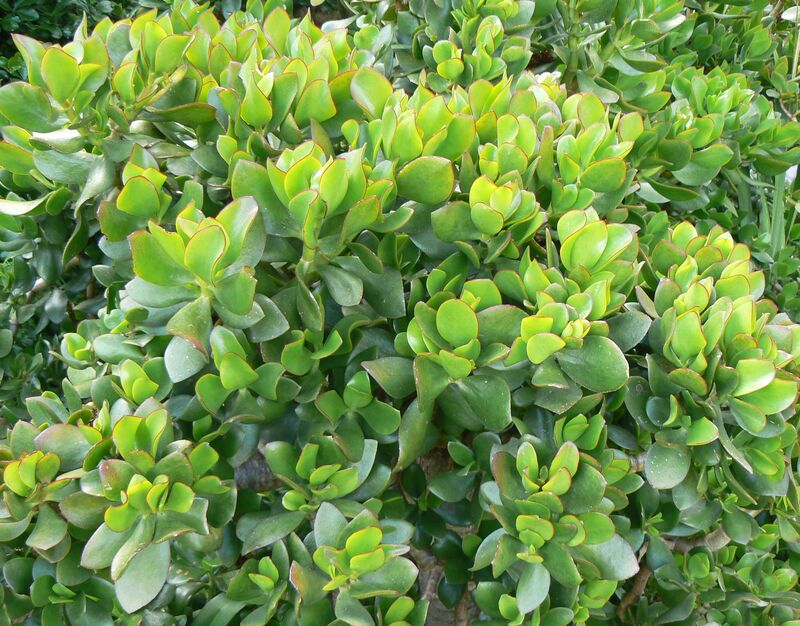
Jade Plant
Crassula argentea
Crassula argentea (most commonly sold as Crassula ovata) is one of the most popular houseplants in the world, and with good reason — it is nearly indestructible, grows slowly into a handsome small tree shape with a thick trunk and glossy oval leaves, and can live for decades with minimal fuss. In feng shui tradition it is a symbol of good fortune and prosperity, which may or may not be why it appears on virtually every office desk in the known world. Give it bright light, well-draining soil, and a light hand with the watering can, and it will outlast several generations of other houseplants.
How to grow Jade Plant
Four or more hours of
Allow soil to dry thoroughly
Tolerates low humidity well, which
65-75°F
Well-draining, gritty soil is essential.
One of the easiest plants
Root rot from overwatering is
Fun Facts
Crassula argentea has been given so many different Latin names over the years — including C. argentea, C. ovata, C. portulaca, and C. obliqua — that even botanical databases still disagree on which is correct. C. ovata is currently the accepted name, but nurseries sell it under all of them.
Toxic to pets
Toxic to dogs, cats, and horses according to the ASPCA. Toxic principles are unknown. Clinical signs include vomiting, depression, and incoordination. Keep away from pets. The sap can also cause dermatitis on human skin with repeated exposure.
Sources
- Jade Plant - ASPCA Toxic and Non-Toxic Plants (opens in new tab)Reference
- Jade Plant - ASPCA Toxic and Non-Toxic Plants (opens in new tab)Reference
- Jade Plant Care Guide - The Old Farmer's Almanac (opens in new tab)Reference
- Jade Plant Care Guide - The Old Farmer's Almanac (opens in new tab)Reference
- Crassula argentea Jade Plant - University of Florida IFAS Extension (opens in new tab)University Extension
- Crassula argentea Jade Plant - University of Florida IFAS Extension (opens in new tab)University Extension
- Jade Plant, Crassula ovata - Wisconsin Horticulture Extension (opens in new tab)University Extension
- Jade Plant, Crassula ovata - Wisconsin Horticulture Extension (opens in new tab)University Extension