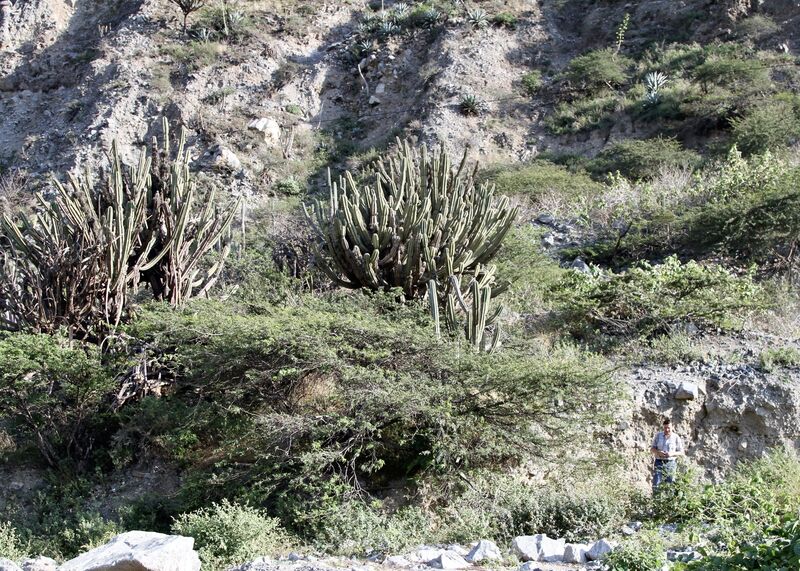
Peruvian Apple Cactus
Cereus peruvianus
Cereus peruvianus is a tall, columnar cactus with a striking blue-green ribbed trunk and white spines that makes an architectural statement in any bright room or sunny outdoor space. You treat it like most cacti: bright light, well-draining soil, deep watering only when the soil is dry, and relative neglect the rest of the time. As a bonus, mature plants produce large, fragrant white flowers that open only at night, and edible fruit with sweet, watermelon-like flesh.
How to grow Peruvian Apple Cactus
full sun (6 or more
Infrequent but deep watering.
40-60%
60-76°F
Fast-draining cactus soil is essential.
Stem cuttings are the easiest method.
Mealybugs and scale are the
Fun Facts
Despite being called the Peruvian Apple Cactus, this plant is not from Peru — it most likely originated in Brazil, Uruguay, or the Caribbean. The name stuck anyway, making it one of botany's more persistent geographical misnomers.
Pet safe
Non-toxic to cats, dogs, and humans. The fruit is edible and safe. The physical spines are the only real hazard.
Sources
- Cereus peruvianus Care Guide - PlantVine (opens in new tab)Reference
- Cereus peruvianus Care Guide — PlantVine (opens in new tab)Reference
- Cereus repandus - Wikipedia (opens in new tab)Reference
- Cereus repandus - World of Succulents (opens in new tab)Reference
- Cereus repandus — Wikipedia (opens in new tab)Reference
- Cereus repandus — World of Succulents (opens in new tab)Reference