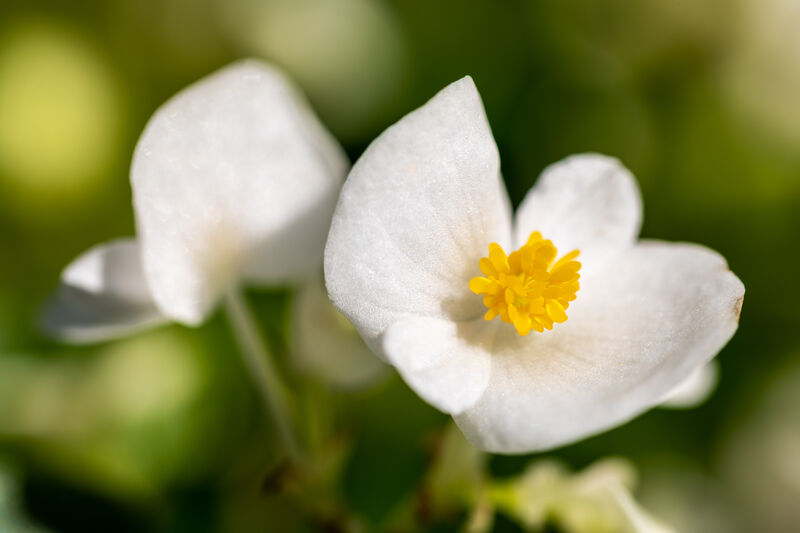
Wax Begonia
Begonia semperflorens
The wax begonia earns its name from its glossy, waxy leaves that come in green or bronze and pair with nonstop blooms of red, pink, or white from spring well into fall. You can grow it outdoors as a bedding plant or bring it inside for winter, where it adapts surprisingly well to indoor light. Its scientific name says it all: semperflorens means 'always flowering,' and this plant really does mean it.
How to grow Wax Begonia
bright indirect light (3-6 feet
Allow the top 1-1.
40-60%
65-78°F
Well-draining, organically rich mix.
Stem cuttings root readily in
Susceptible to powdery mildew (from
Fun Facts
The genus Begonia was named in 1700 by French botanist Charles Plumier to honor Michel Begon, the French governor of Saint-Domingue, as a thank-you for recommending Plumier to King Louis XIV as an official plant collector.
Toxic to pets
Toxic to cats, dogs, and horses (ASPCA confirmed). Toxic principles are soluble calcium oxalates; clinical signs include vomiting, salivation, and kidney failure in grazing animals. The underground portions (roots, tubers) are the most toxic part.
Sources
- All about Begonia - History, Meaning, Facts, Care & More (opens in new tab)Botanical Garden
- Begonia cucullata - Wikipedia (opens in new tab)Botanical Garden
- Understanding Habitat Origins for Houseplant Happiness: Begonias | Pacific Horticulture (opens in new tab)Botanical Garden
- All about Begonia - History, Meaning, Facts, Care & More (opens in new tab)Reference
- Begonia cucullata - Wikipedia (opens in new tab)Reference
- Toxic and Non-toxic Plants: Begonia (opens in new tab)Reference
- Toxic and Non-toxic Plants: Begonia (opens in new tab)Reference
- Understanding Habitat Origins for Houseplant Happiness: Begonias | Pacific Horticulture (opens in new tab)Reference
- Wax Begonia Care (Begonia Semperflorens) - Smart Garden Guide (opens in new tab)Reference
- Wax Begonia Care (Begonia Semperflorens) - Smart Garden Guide (opens in new tab)Reference
- Wax Begonias - A Care & Growing Guide | Garden Design (opens in new tab)Reference
- Wax Begonias - A Care & Growing Guide | Garden Design (opens in new tab)Reference