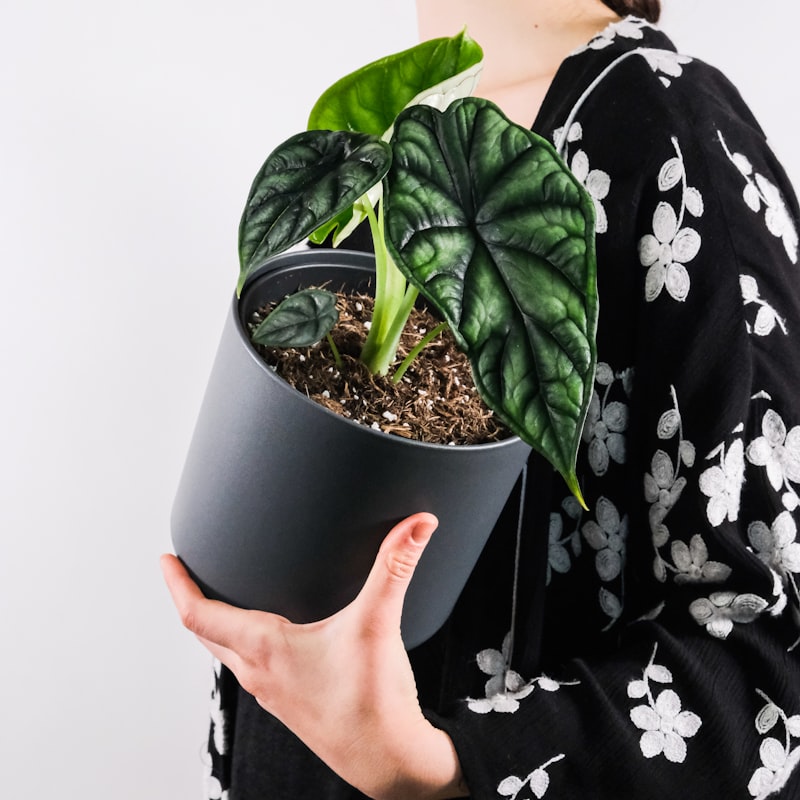
Alocasia Dragon Scale
Alocasia baginda 'Dragon Scale'
The leaf surface has genuine raised texture that looks like reptile scales. Originates from Borneo limestone forest understory, which informs its soil and humidity needs.
Buy this plant $42 In Stock- Light
- Bright Indirect
- Humidity
- 70-80%
- Temperature
- 65-75°F
Light Requirements
Bright Indirect. Place within 3-5 feet of a south or east-facing window, out of direct sun. Direct afternoon sun will scorch leaves.
Watering
Water when the top 1-2 inches of soil are dry, and use distilled or filtered water. This plant is sensitive to both overwatering and tap water chemicals, so you've got two ways to mess it up on the watering front. In winter it may enter dormancy: if it drops all its leaves and goes completely still, don't panic. Reduce watering significantly and wait. New growth will emerge from the corm when it's ready.
Humidity
Target humidity: 70-80%. A room humidifier is the most reliable solution. Pebble trays and misting provide minimal benefit compared to a small ultrasonic humidifier near the plant.
Temperature
Keep between 65-75°F. Avoid cold drafts from windows in winter and hot air from vents year-round. Most tropical houseplants suffer below 55°F and should never be exposed to frost.
Soil and Potting
Chunky, well-draining, and porous: standard potting soil with generous perlite and orchid bark. Target pH 5.5-6.5. The soil needs to stay moist without compacting or sitting wet. This is a plant from Borneo's limestone forest understory, so it's used to soil that drains fast and doesn't hold stagnant water.
Propagation
You can't propagate this one from a leaf or stem cutting. During spring repotting, separate naturally distinct rhizome sections that each have roots attached. You can also look for small firm corms hiding in the soil around the root ball, remove the outer skin, and plant them in moist sphagnum moss. Small shoots appear in weeks to months. Patience is required.
Common Problems
Dormancy is normal, especially in winter, and it looks alarming. The plant can drop every single leaf and appear completely dead. Reduce watering, keep it warm, and wait it out. Spider mites are the other thing to watch: they love this plant when humidity drops below its comfort zone. Stunted new leaves usually point to insufficient light, low humidity, or a root-bound pot.
Worth Knowing
- The species name baginda comes from an Indonesian word meaning Majesty. It originates from limestone forest understory on Borneo, which is why some growers report better results with a slightly less acidic mix than they'd use for other aroids.
- Silver Dragon is a distinct cultivar of the same species that gets confused with Dragon Scale constantly. Dragon Scale has darker green leaves with prominent silver-green scale-like patterning and high contrast. Silver Dragon has lighter, more uniformly silver-gray leaves with less contrast. They're different plants.
- Mature Alocasia baginda plants can produce small inflorescences during active spring and summer growth, which is unusual for a jewel Alocasia kept in a home. It typically requires several years old in near-optimal conditions. Don't hold your breath for the first couple of years.
Toxicity
Highly toxic to cats, dogs, and humans. Contains insoluble oxalate crystals at high concentration. Ingestion causes throat swelling and ulceration, and can require veterinary intervention in pets. Take this one seriously.