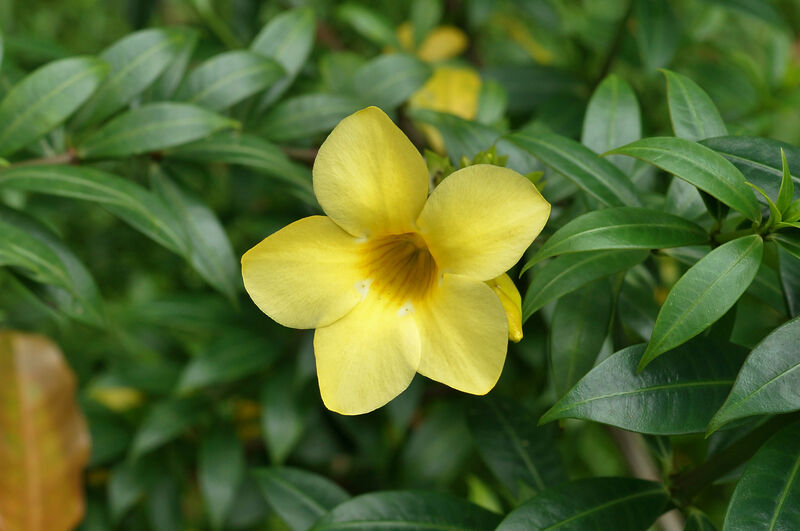
Allamanda
Allamanda cathartica
Allamanda cathartica is a sun-hungry tropical vine that throws out large, butter-yellow trumpet flowers almost nonstop in warm weather -- the kind of plant that makes a pergola look like it belongs in Rio. It grows fast, blooms heavily, and asks for very little beyond full sun and consistent moisture. The species name cathartica is Latin for 'cathartic,' a fair warning: every part of this plant is toxic if ingested, and the milky sap will irritate your skin, so gloves are a good idea.
How to grow Allamanda
full sun (6 or more
Water regularly, allowing the top
60-80%
60-65°F
Well-draining mix with good organic content.
Stem tip cuttings taken in
Scale insects, mealybugs, spider mites,
Fun Facts
The genus Allamanda was named by Linnaeus in honor of Dr. Frederic-Louis Allamand, a Swiss physician and botanist who visited Guyana in the early 18th century -- making this a plant with an impressive dedication.
Toxic to pets
Highly toxic to humans, dogs, and cats. All plant parts contain iridoid lactones and cardiac glycosides causing vomiting, diarrhea, and irregular heartbeat. The sap irritates skin and eyes. Seek immediate veterinary or medical attention if ingested.
Sources
- Allamanda cathartica - Missouri Botanical Garden Plant Finder (opens in new tab)Botanical Garden
- Allamanda cathartica - Missouri Botanical Garden Plant Finder (opens in new tab)Reference
- Allamanda cathartica - Wikipedia (opens in new tab)Reference
- Allamanda cathartica - Wikipedia (opens in new tab)Reference
- Allamanda cathartica: Allamanda - IVIS Guide to Poisonous Plants (opens in new tab)Reference
- Allamanda cathartica: Allamanda - IVIS Guide to Poisonous Plants (opens in new tab)Reference
- Allamanda cathartica - NC State Extension Gardener Plant Toolbox (opens in new tab)University Extension
- Allamanda cathartica - NC State Extension Gardener Plant Toolbox (opens in new tab)University Extension
- Golden Trumpet, Allamanda cathartica - Wisconsin Horticulture Extension (opens in new tab)University Extension
- Golden Trumpet, Allamanda cathartica - Wisconsin Horticulture Extension (opens in new tab)University Extension