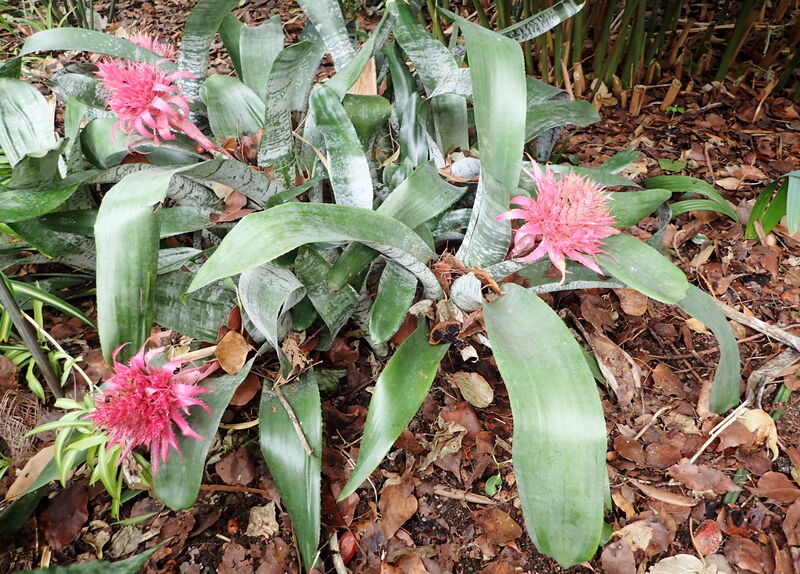
Silver Vase
Aechmea fasciata
Aechmea fasciata is a species of flowering plant in the Bromeliaceae family.[2] It is commonly called the silver vase or urn plant and is native to Brazil. This plant is probably the best known species in this genus, and it is often grown as a houseplant in temperate areas.
How to grow Silver Vase
bright indirect light (3-6 feet
This bromeliad uses a two-system approach.
60%
Prefers 60 to 80°F (16 to 27°C).
A light, fast-draining mix is
After flowering, the mother plant
Mealybugs hide in leaf axils
Fun Facts
The central water-holding urn is not just decorative — in the wild Brazilian rainforest, it creates a self-contained aquatic microhabitat that can contain algae, invertebrates, frog tadpoles, and even specialized insects that live nowhere else.
Pet safe
Not toxic to cats, dogs, or humans. The ASPCA lists bromeliads as non-toxic. Physical hazard warning: the leaf margins on Aechmea fasciata are genuinely sharp and serrated - they can cause cuts and skin irritation in curious pets (or inattentive owners).
Sources
- Blushing Bromeliad - ASPCA Toxic and Non-Toxic Plants (opens in new tab)ASPCA
- Blushing Bromeliad — ASPCA Toxic and Non-Toxic Plants (opens in new tab)ASPCA
- Aechmea fasciata - Missouri Botanical Garden Plant Finder (opens in new tab)Botanical Garden
- Aechmea fasciata — Missouri Botanical Garden Plant Finder (opens in new tab)Botanical Garden
- Aechmea fasciata (Urn Plant) - Our House Plants (opens in new tab)Reference
- Aechmea fasciata (Urn Plant) — Our House Plants (opens in new tab)Reference
- Aechmea fasciata - NC State Extension Gardener Plant Toolbox (opens in new tab)University Extension
- Aechmea fasciata — NC State Extension Gardener Plant Toolbox (opens in new tab)University Extension