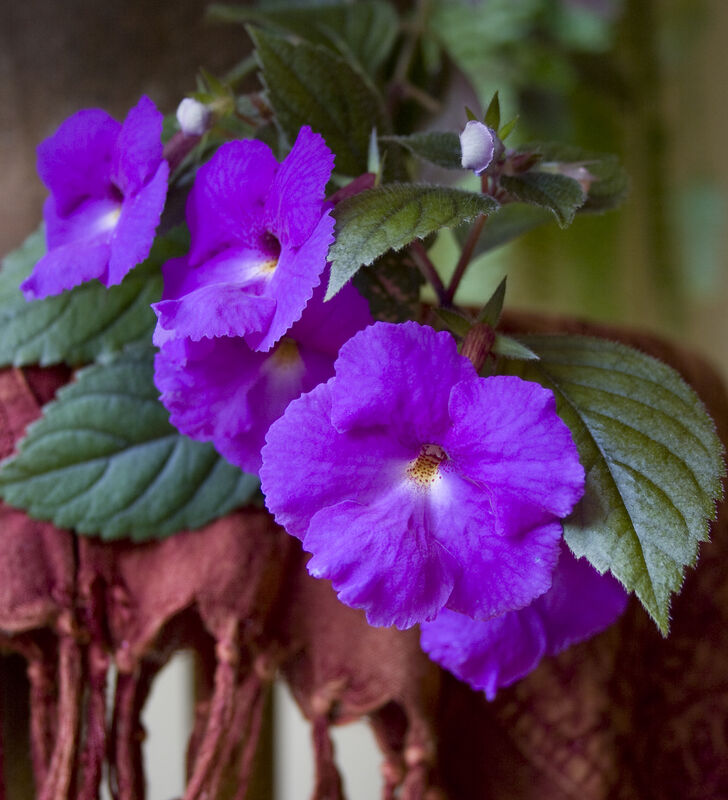
Magic Flower
Achimenes hybrids
Achimenes is a rhizomatous perennial that puts on an incredible flower show all summer, producing pansy-like blooms in purples, pinks, reds, whites, and yellows, then politely disappears underground for the winter. It has been a houseplant since at least 1778, predating the African violet by over a century, though it is far less famous than it deserves to be. The tiny rhizomes look like little pinecones, which is a detail that never stops being charming.
How to grow Magic Flower
bright indirect light (3-6 feet
Keep the soil evenly moist
50%
Ideal range is 65 to 75°F (18 to 24°C).
A light, fast-draining mix is essential.
Rhizome division is the easiest method.
Aphids, mealybugs, and spider mites
Fun Facts
Achimenes have been cultivated as houseplants since 1778, which makes them older as a houseplant than African violets by more than 100 years.
Toxic to pets
No reported toxicity in any Achimenes species to cats, dogs, or humans. The plant is not edible and there is no reason to encourage snacking on it, but it is not considered dangerous.
Sources
- Achimenes - Pacific Bulb Society (opens in new tab)Reference
- Achimenes — Pacific Bulb Society (opens in new tab)Reference
- How to Care for Achimenes Indoors - Guide to Houseplants (opens in new tab)Reference
- How to Care for Achimenes Indoors — Guide to Houseplants (opens in new tab)Reference
- Achimenes - NC State Extension Gardener Plant Toolbox (opens in new tab)University Extension
- Achimenes — NC State Extension Gardener Plant Toolbox (opens in new tab)University Extension